

Phnom Penh in 2 Days: A Practical Itinerary
The Royal Palace and National Museum, the Khmer Rouge memorials, the markets and a Mekong sunset — a respectful, practical two-day Phnom Penh plan with Maps links, budgets and the things to know.
Phnom Penh, Cambodia's riverfront capital, packs a golden royal palace, world-class Khmer sculpture, sobering recent history, French-colonial streets and a buzzing café-and-food scene into a compact, walkable centre. Two days is enough for the essentials without rushing the parts that deserve time.
This two-day plan keeps the royal city and riverfront together on day one, then gives the Khmer Rouge memorials — Tuol Sleng and Choeung Ek — the slower, respectful half-day they deserve on day two, balanced with the markets and a Mekong sunset. Bring clean small US-dollar bills, dress modestly for the palace, and link every stop to Google Maps.
At a glance
Your day-by-day Phnom Penh route
A 2-day Phnom Penh route
The royal city and riverfront, then a respectful history half-day with the memorials, the markets and a Mekong sunset.
Day one is the royal city, Wat Phnom and the Central Market with a Khmer barbecue and a sunset cruise; day two is a sombre, unhurried morning at Tuol Sleng and Choeung Ek, then the Russian Market, Wat Langka and the Independence Monument after dark. No place or dish repeats.
Day 1Royal city, Wat Phnom & the riverfront at sunset
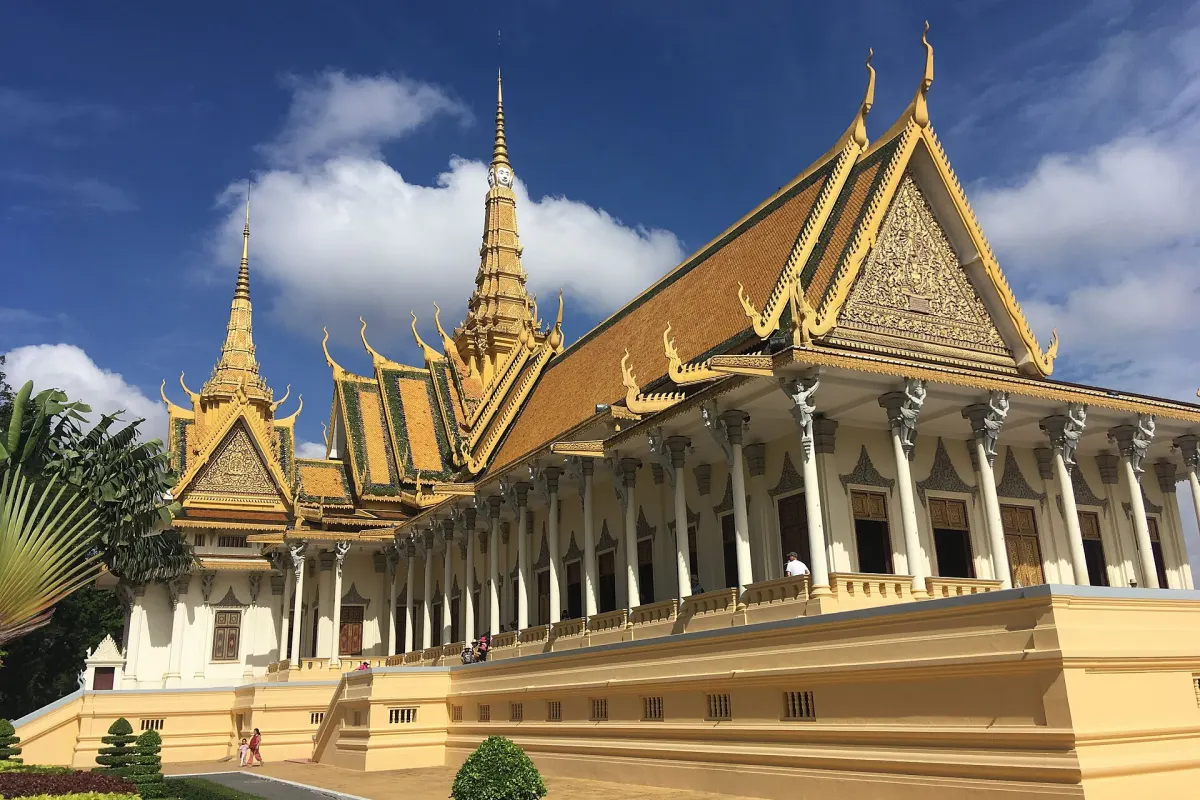
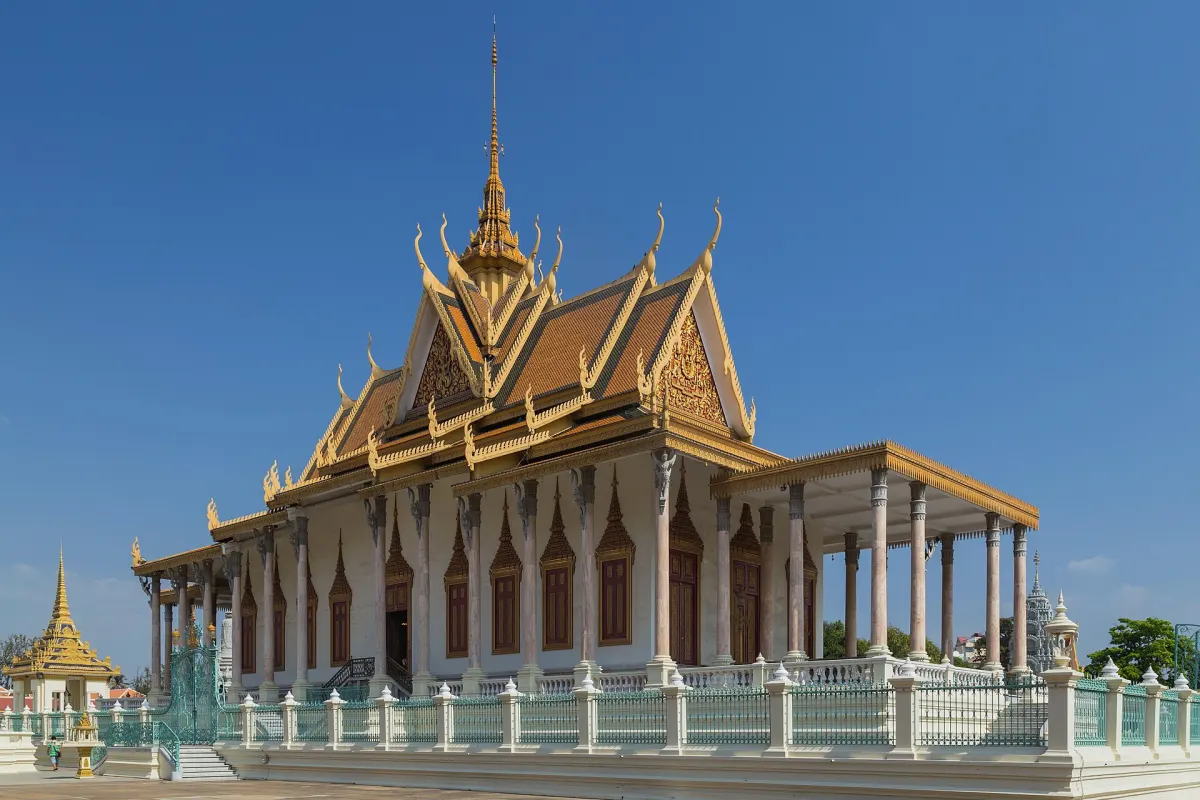
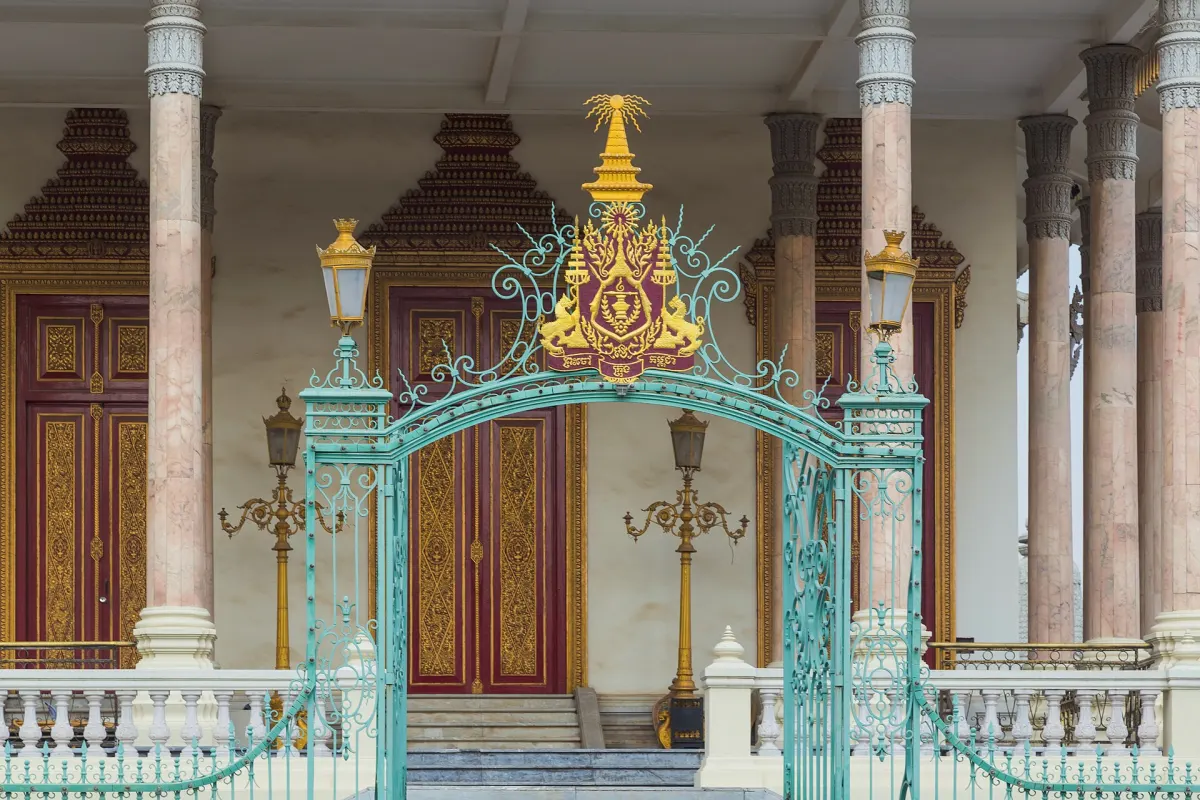
- Royal Palace & Silver PagodaRiverside
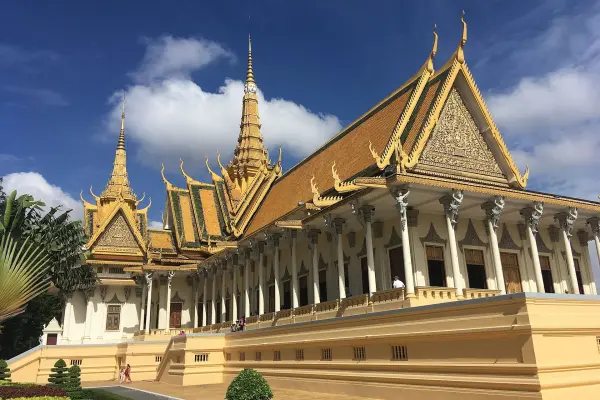
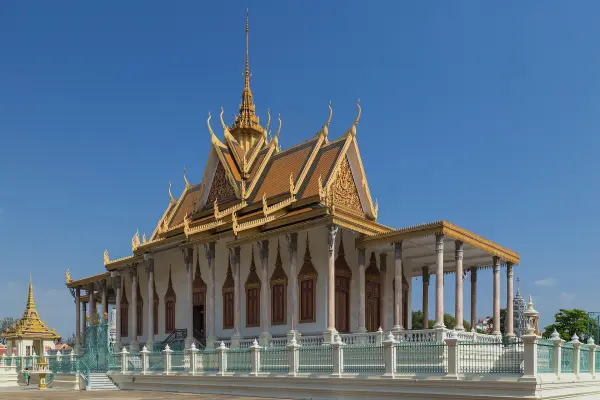
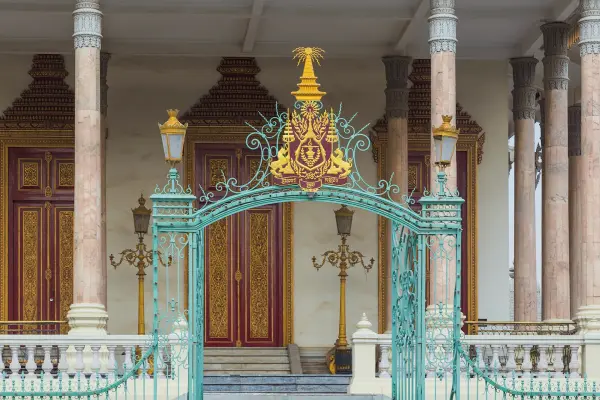 Photos: Christophe95, CC BY-SA 4.0; Photo: Marcin Konsek / Wikimedia Commons, CC BY-SA 4.0; Photo: Marcin Konsek / Wikimedia Commons, CC BY-SA 4.0
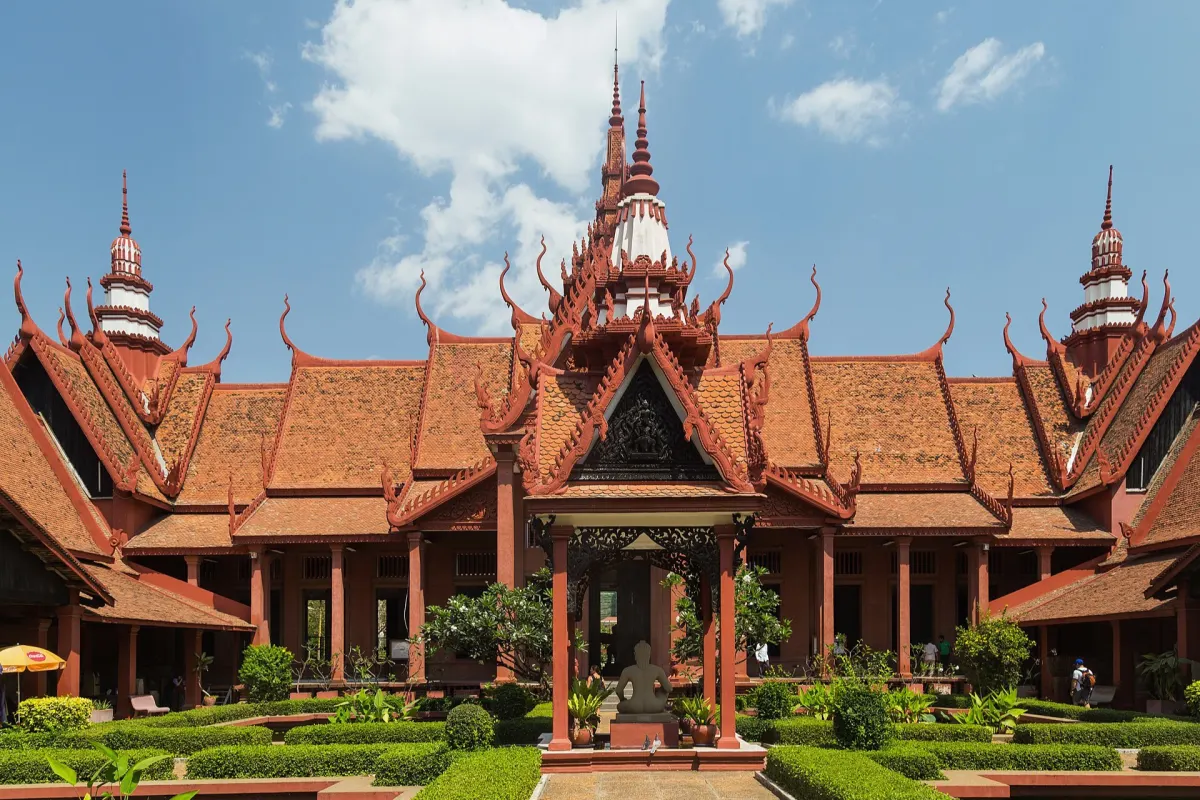
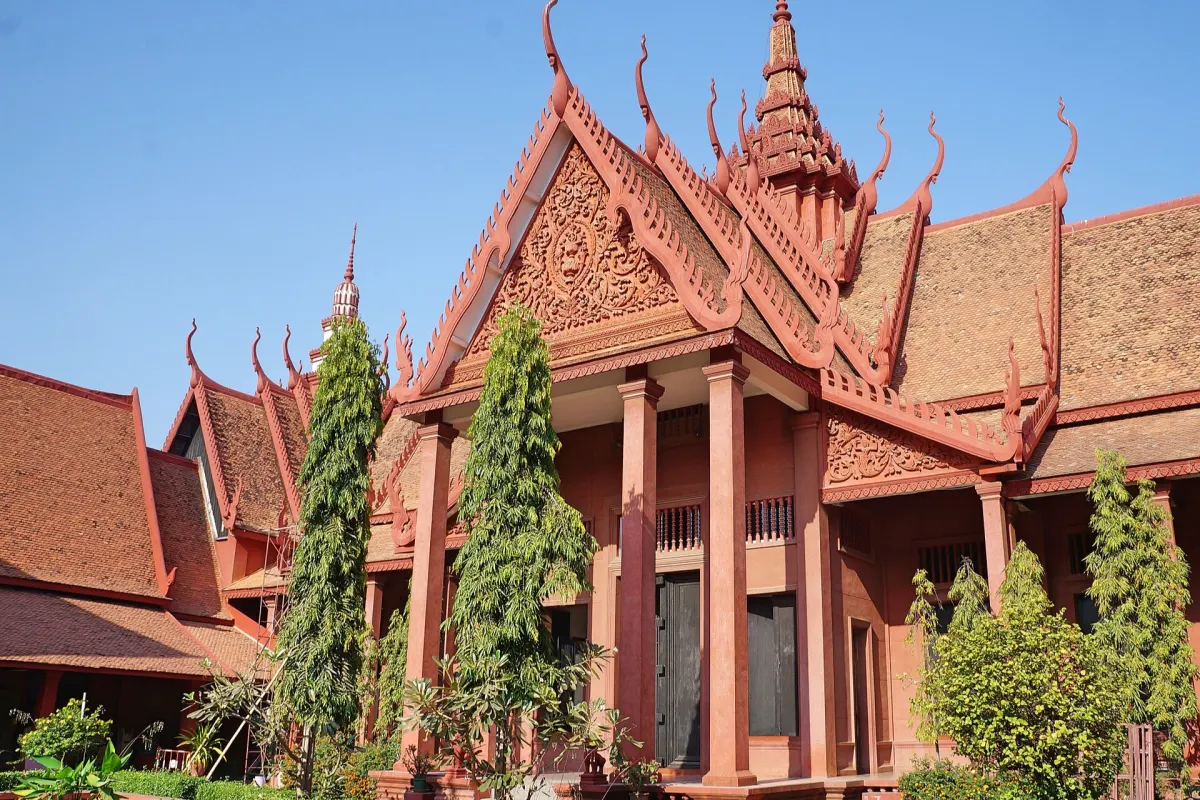
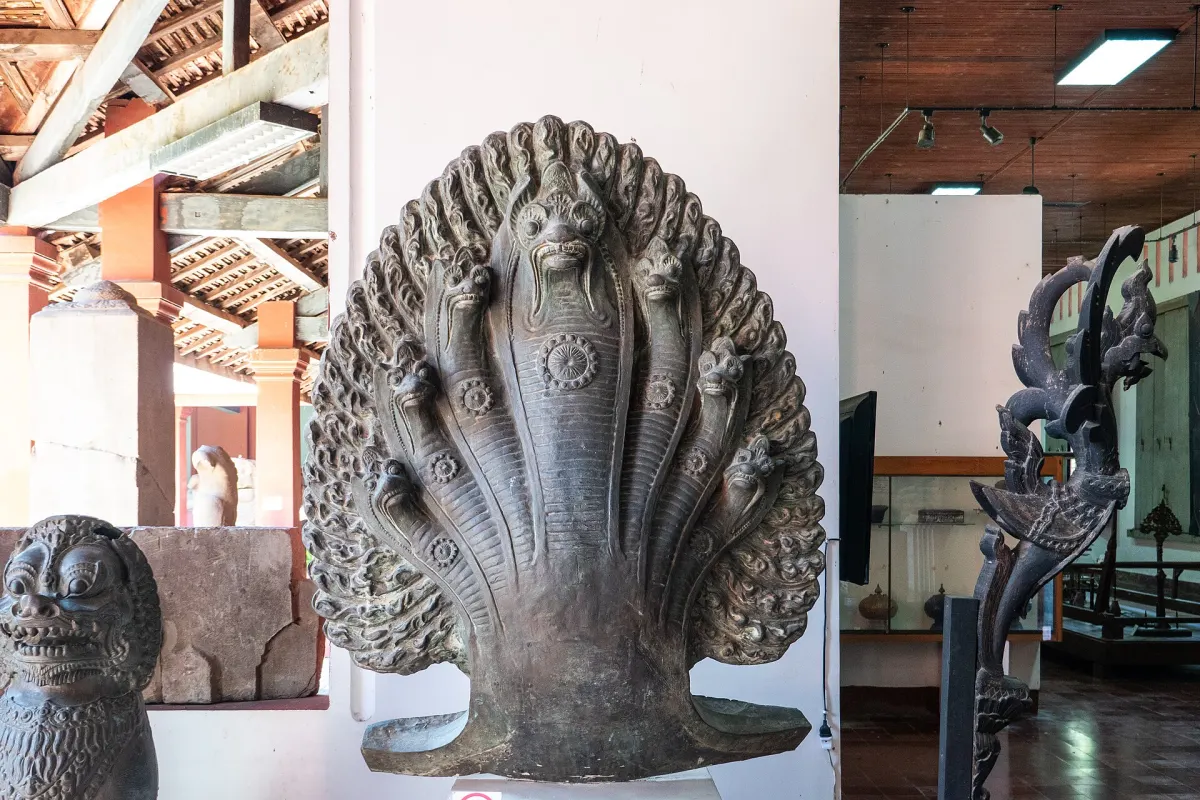
- National Museum of CambodiaRiverside
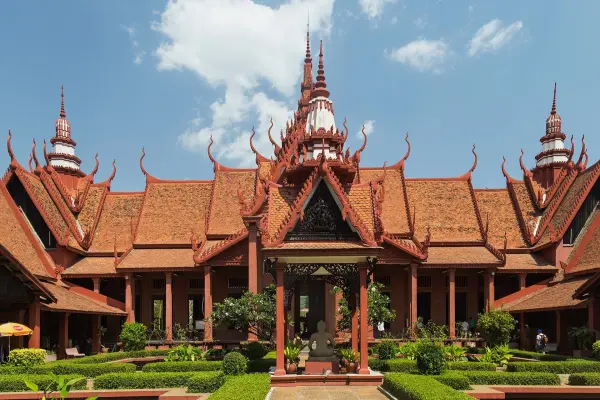
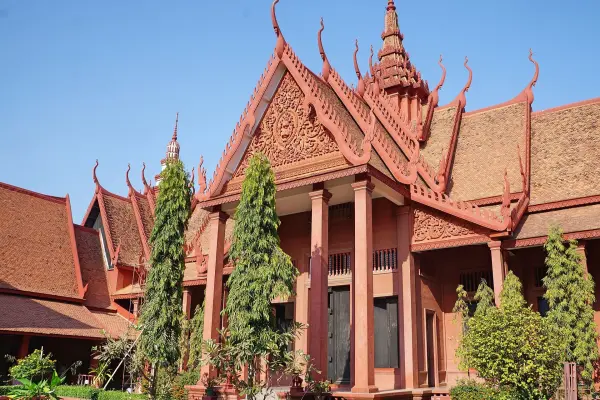
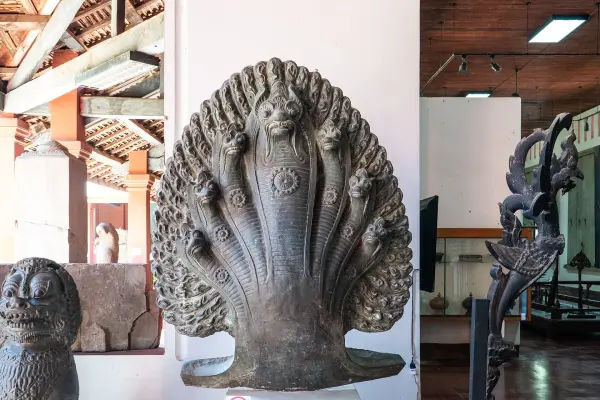 Photos: Photo: Marcin Konsek / Wikimedia Commons, CC BY-SA 4.0; Pierre André, CC BY-SA 4.0; PsamatheM, CC BY-SA 4.0
- Hand-pulled noodles & dumplings: David's Restaurant Homemade NoodlesRiverside (by the National Museum)Also good: Chinese Noodle Restaurant · Boeung Keng Kang (Monivong at St 93)
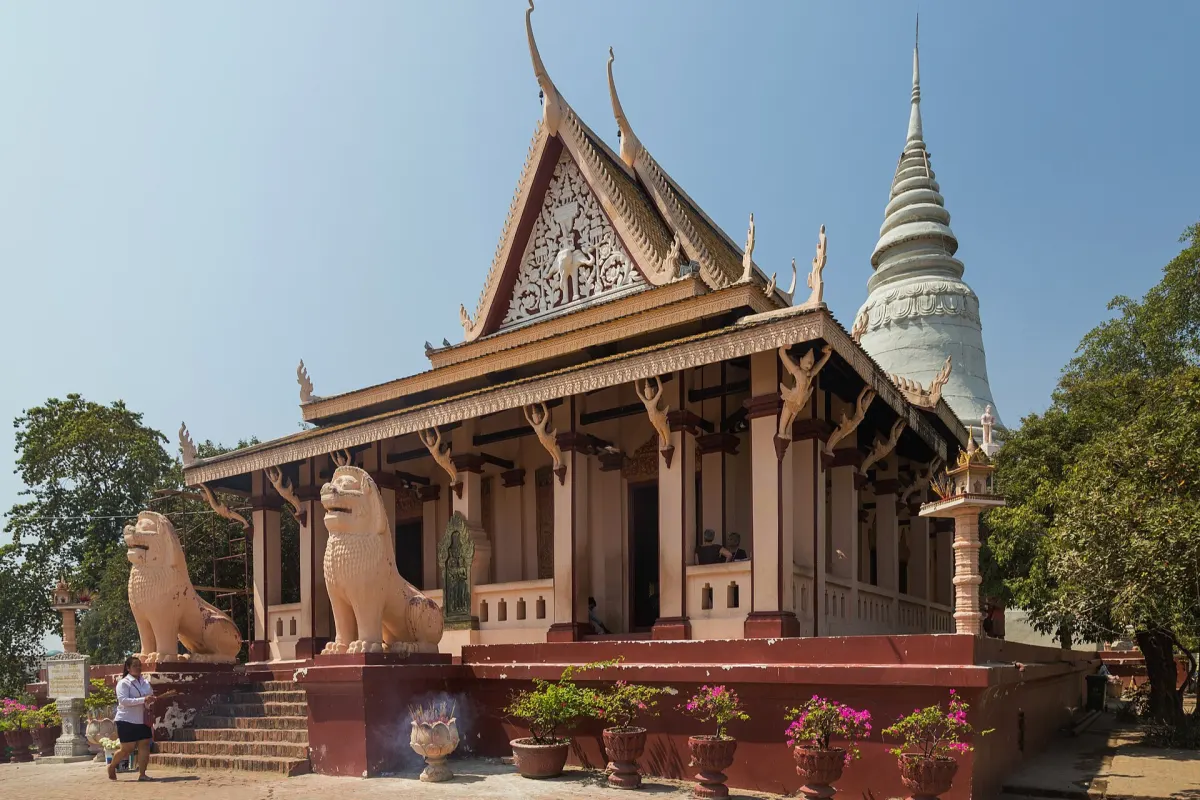
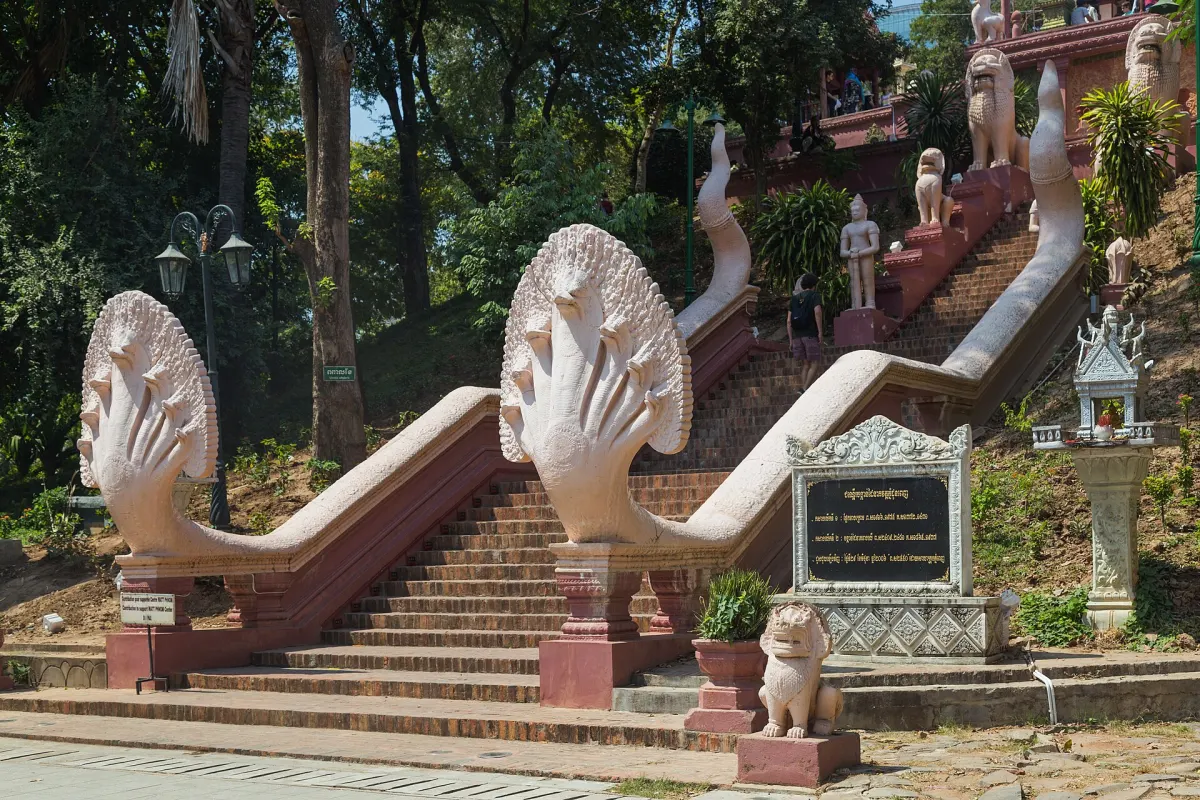
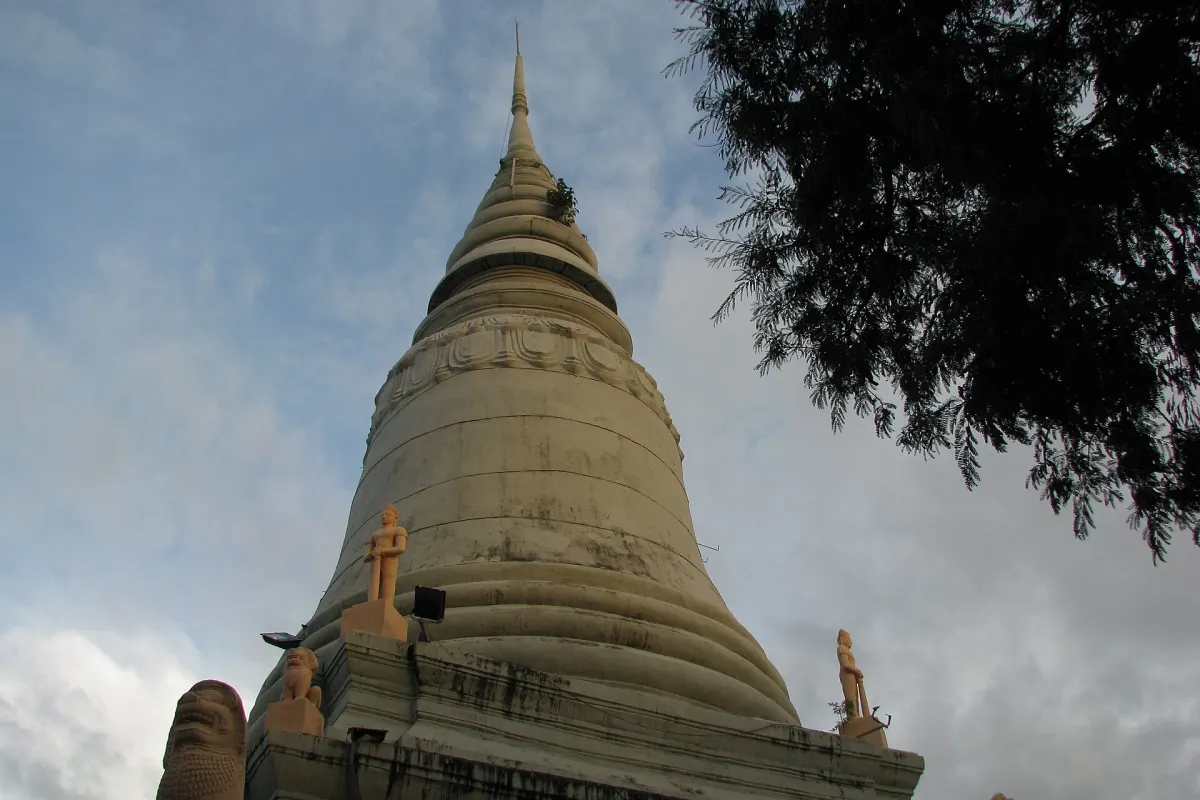
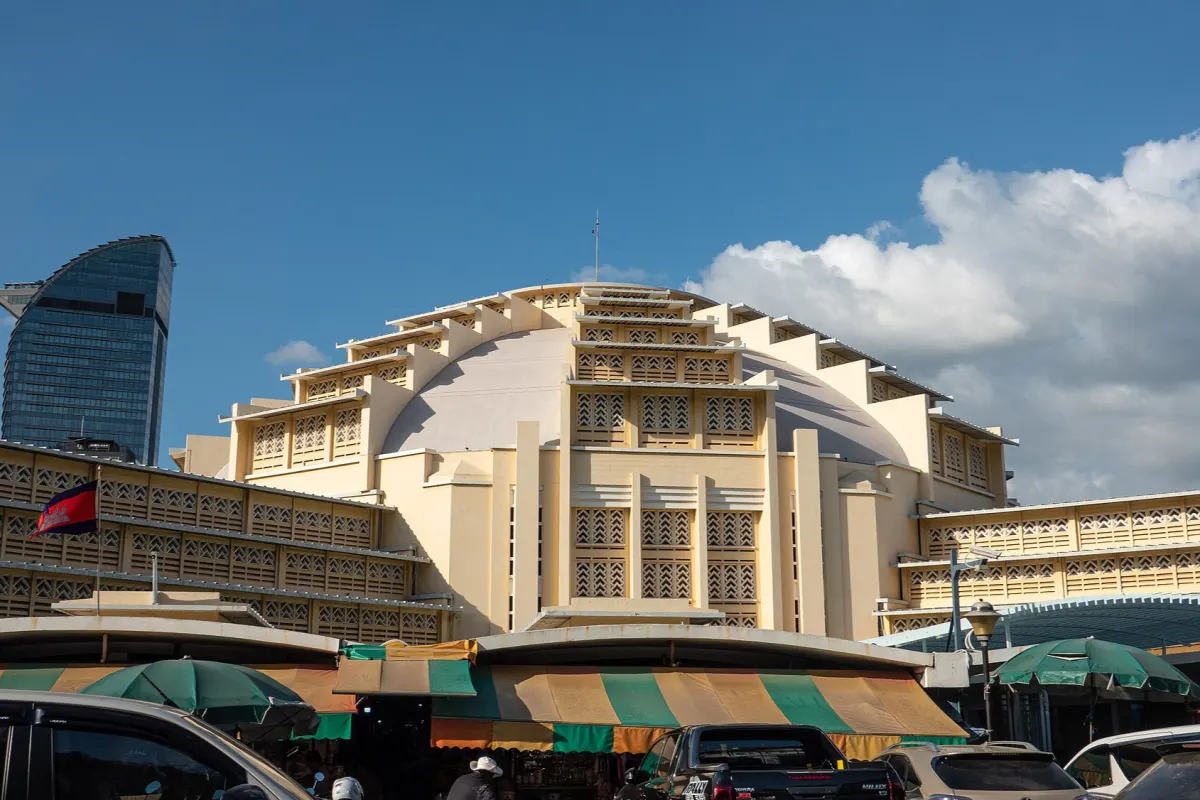
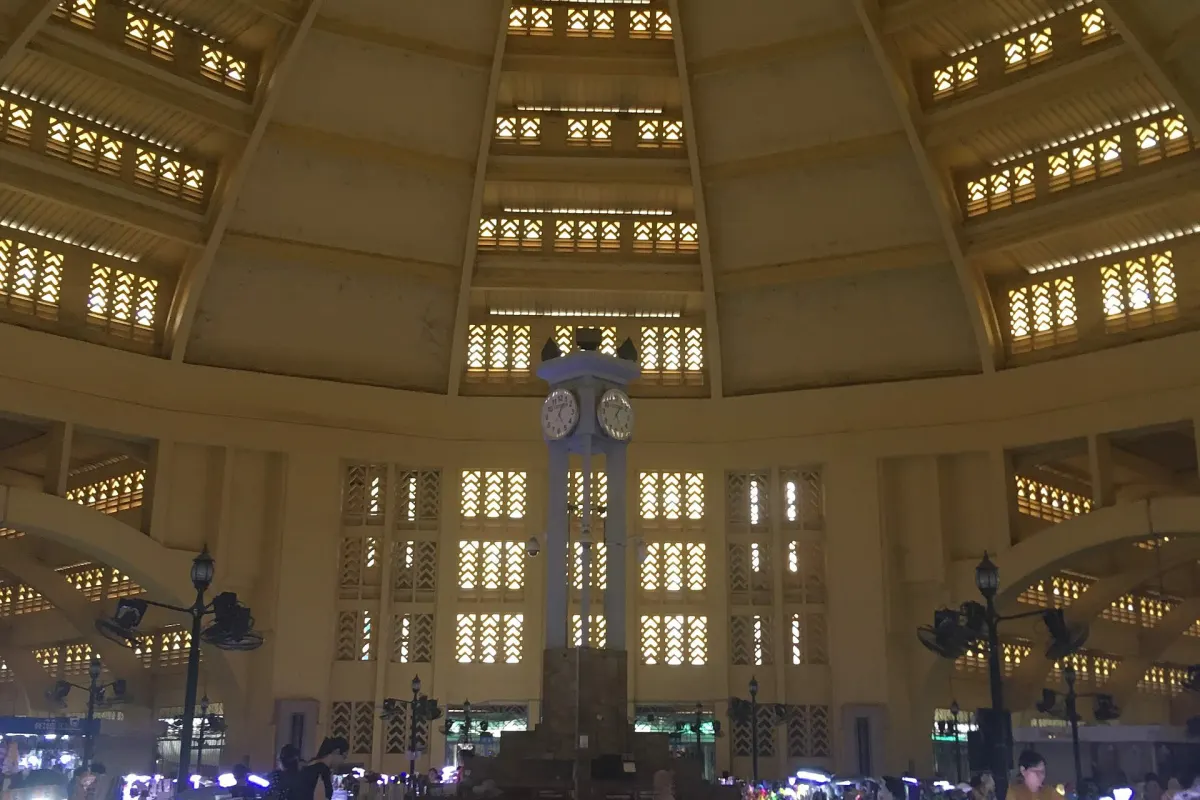
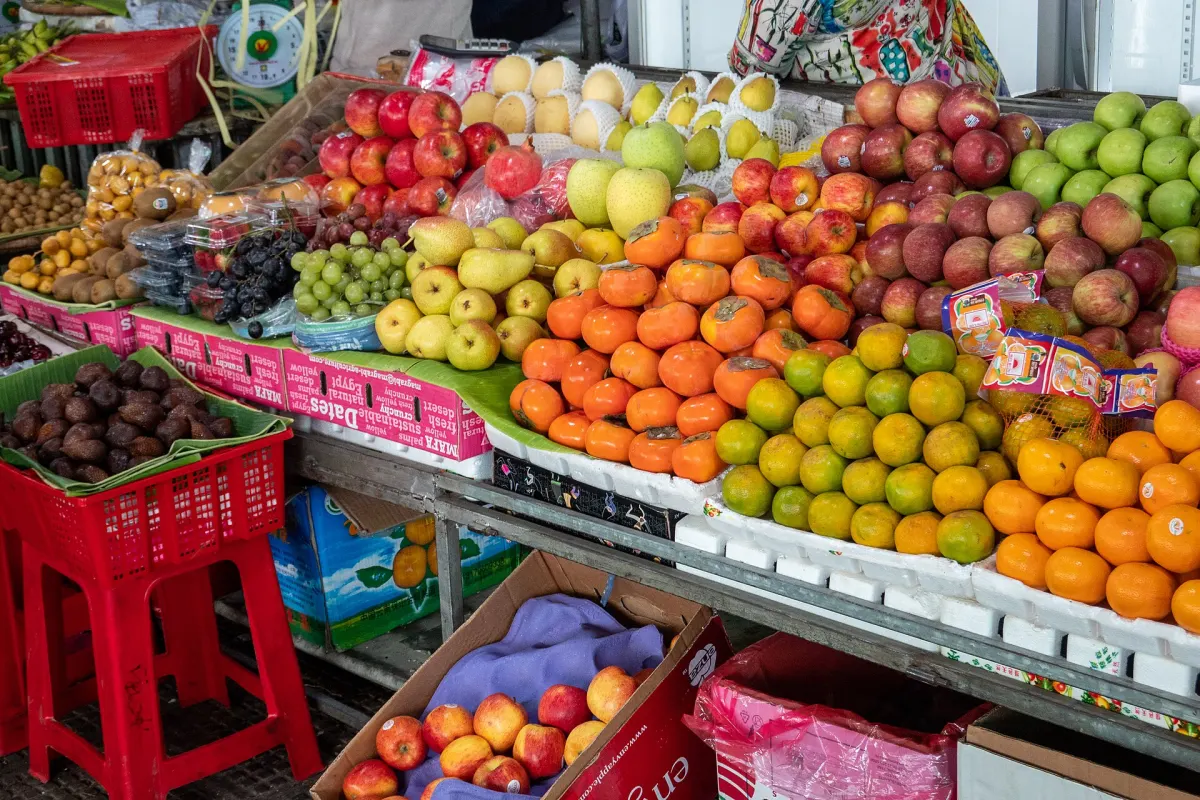
- Cambodian BBQ & soup: Sovanna II RestaurantTonle BassacAlso good: 54 Langeach Sros (54 ល្ងាចស្រស់) · Daun Penh (Street 178)
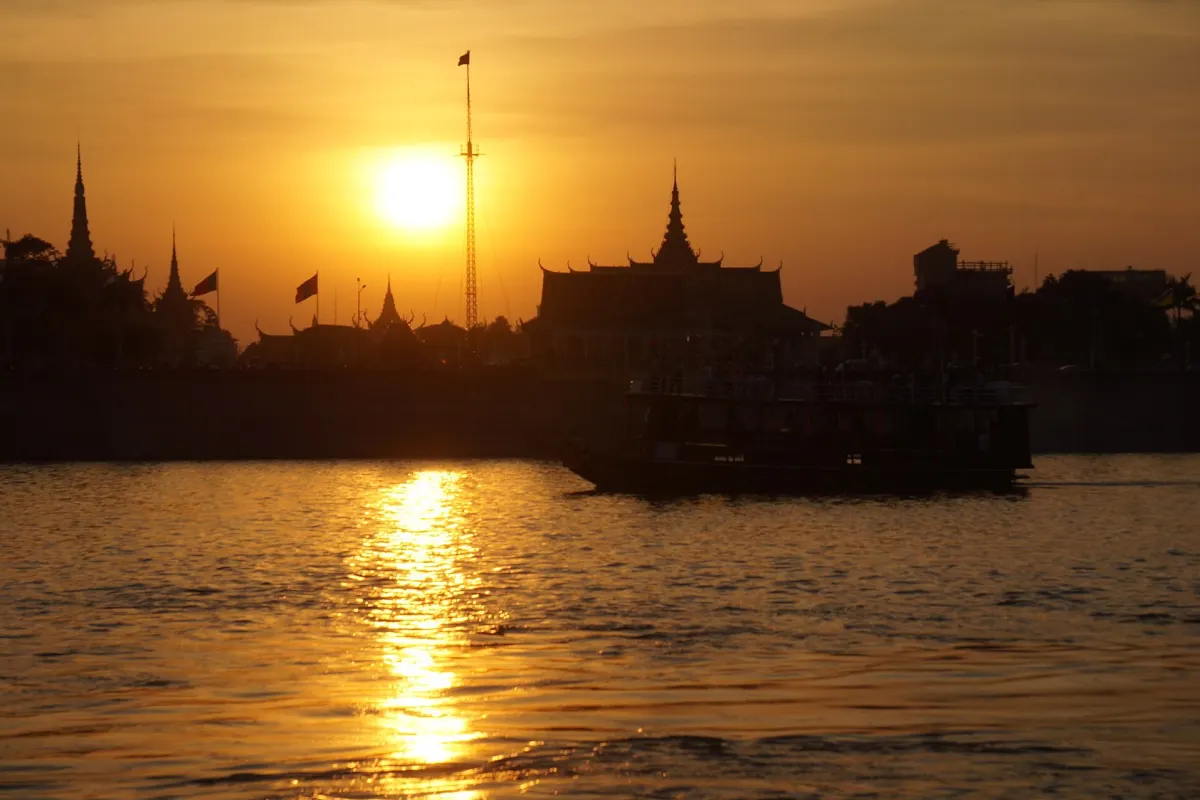
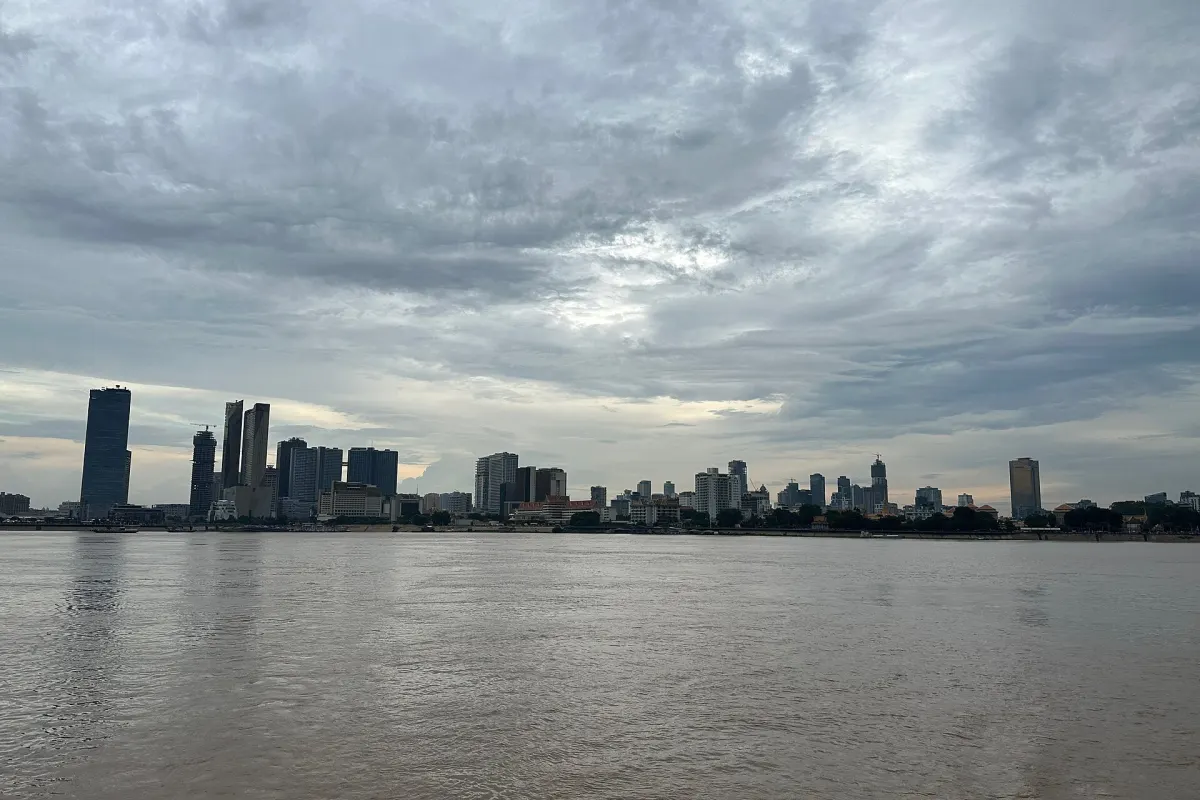
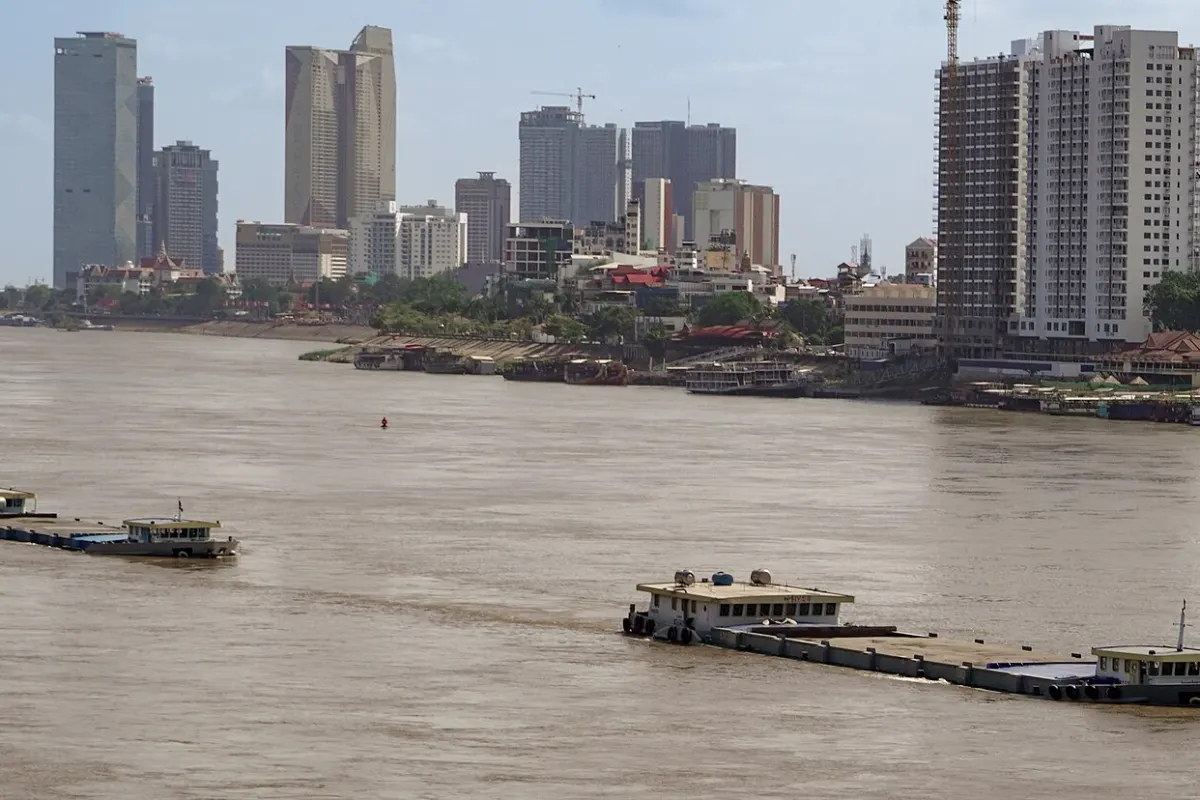
If it rains The National Museum is indoors and the Palace pavilions give some cover; do the Palace first (it closes over lunch) and keep the afternoon temples short if it pours.
Add if you have time Wat Ounalom on the quay before the cruise.
Day 2The memorials, the Russian Market & the Independence Monument
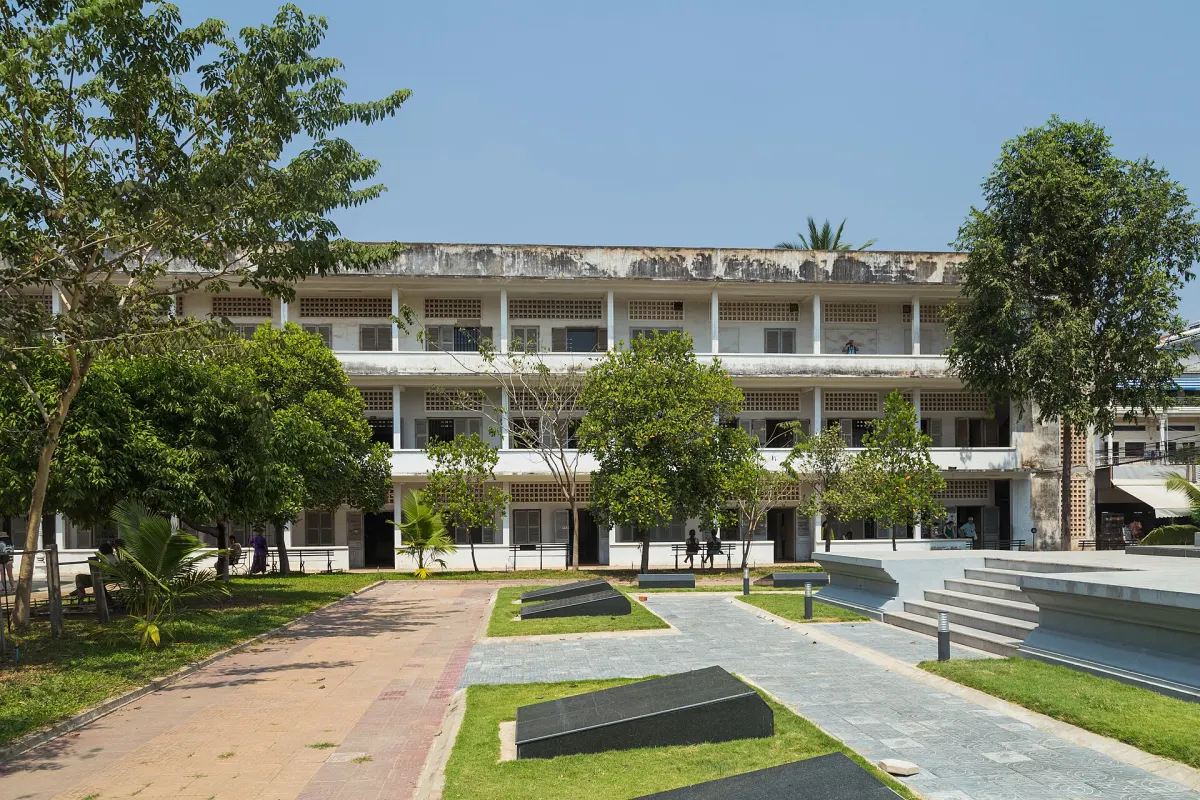
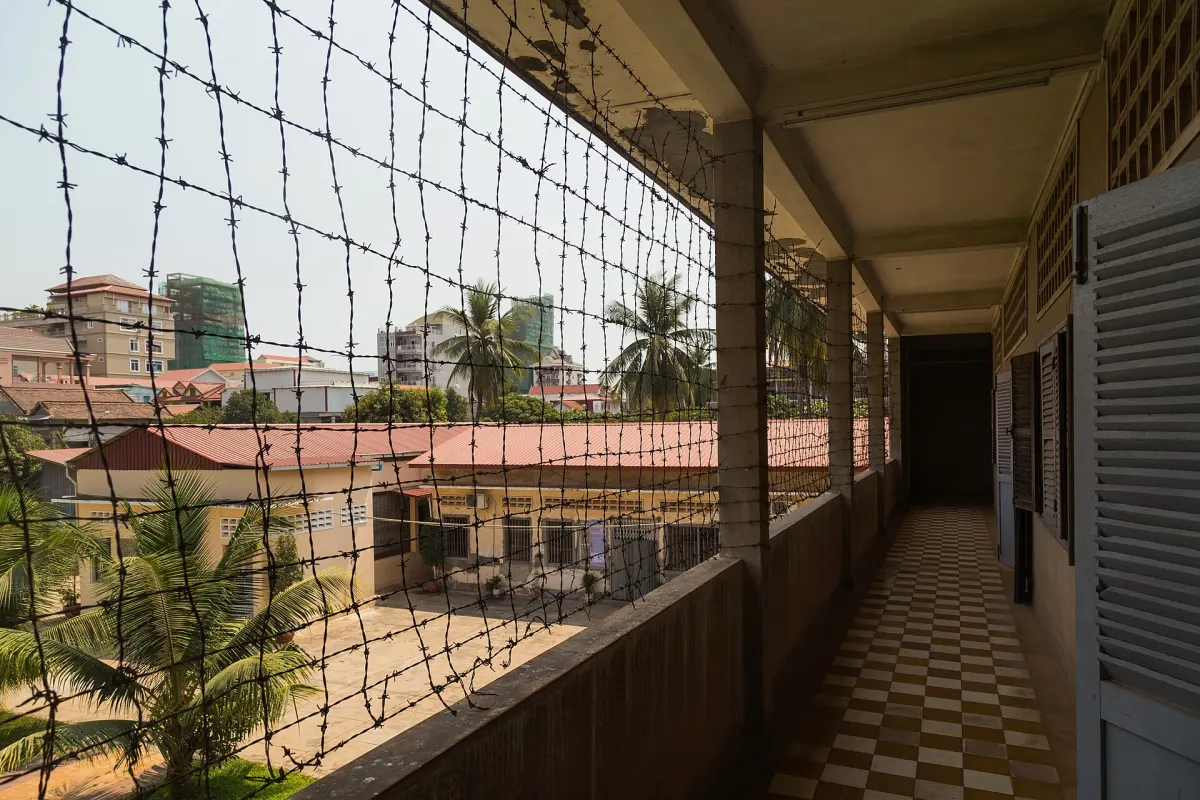
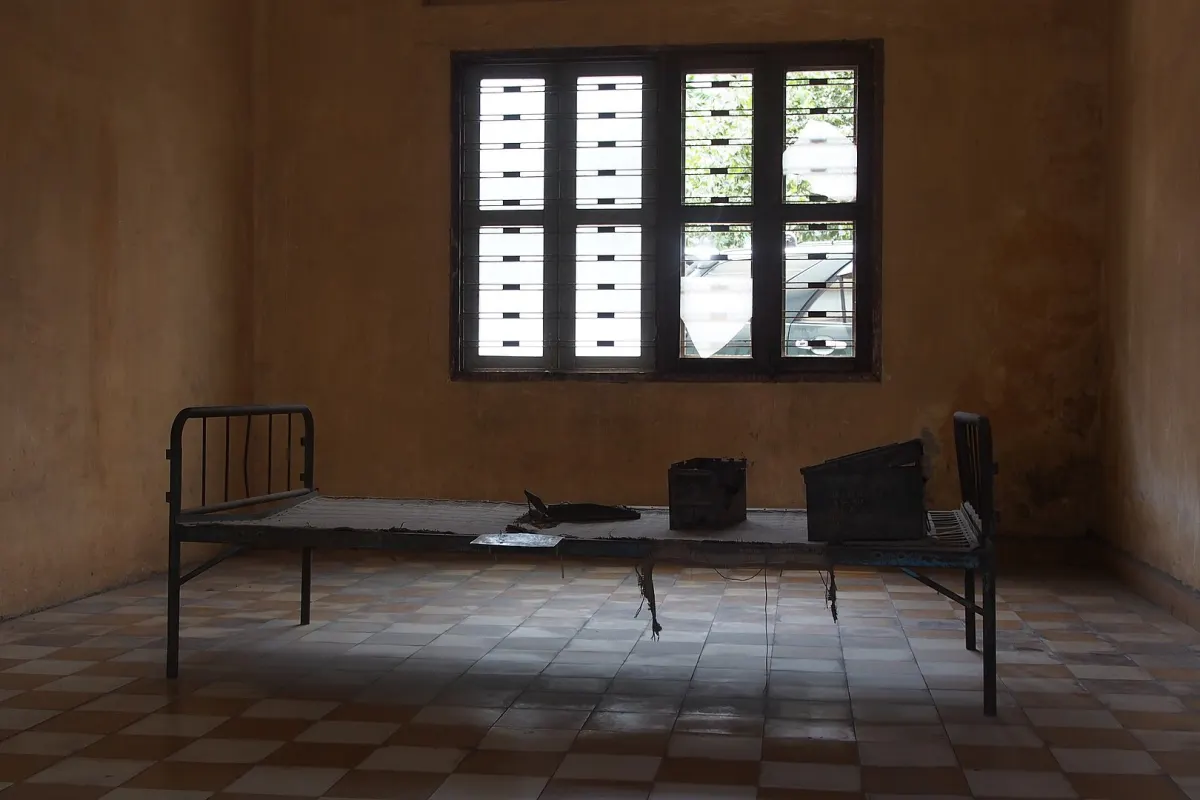
- Tuol Sleng (S-21) Genocide MuseumTicketsCity
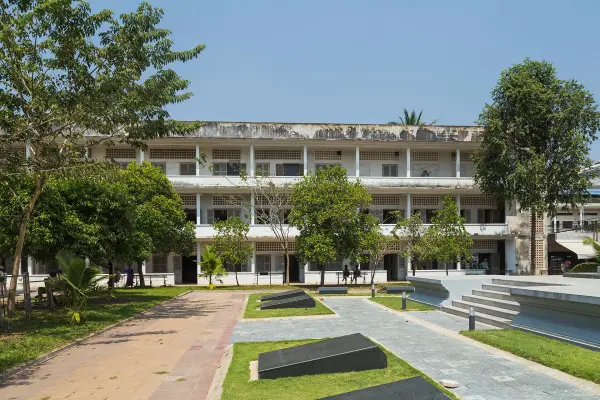
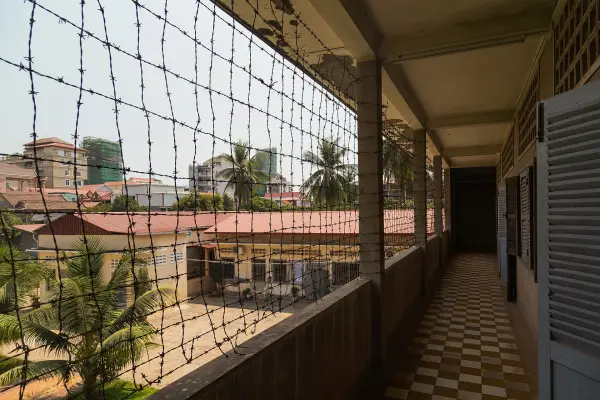
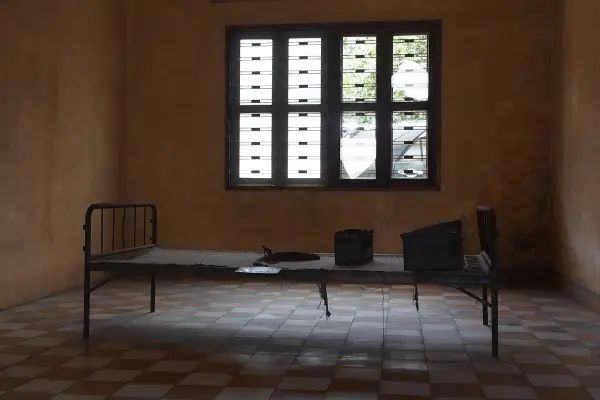 Photos: Photo: Marcin Konsek / Wikimedia Commons, CC BY-SA 4.0; Photo: Marcin Konsek / Wikimedia Commons, CC BY-SA 4.0; Clay Gilliland, CC BY-SA 2.0
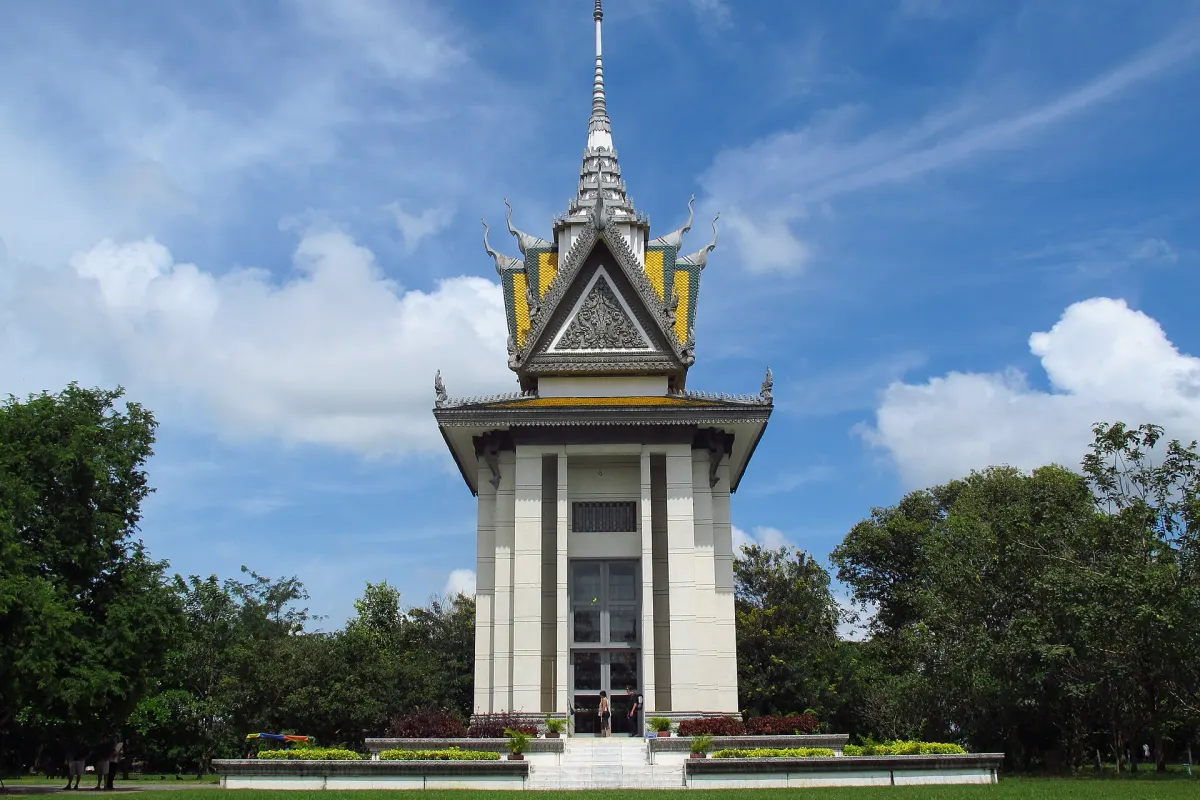
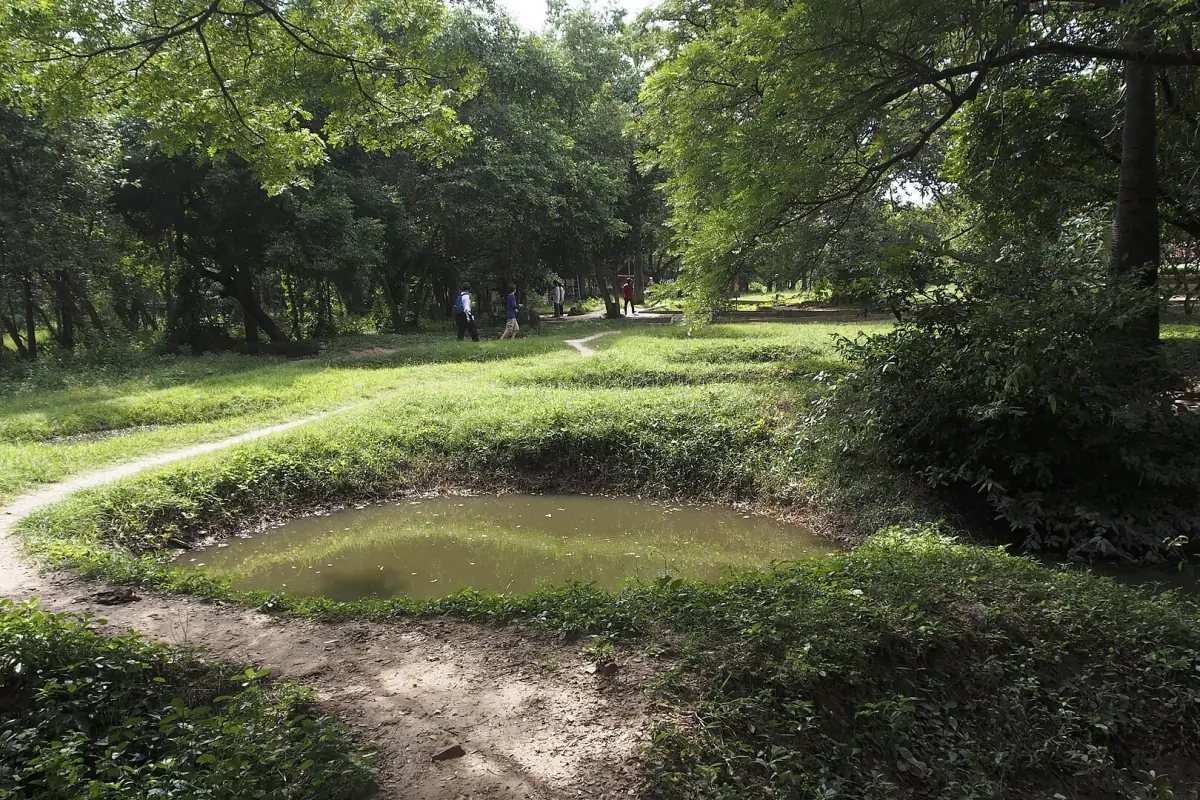
- Choeung Ek (Killing Fields)TicketsDay trip
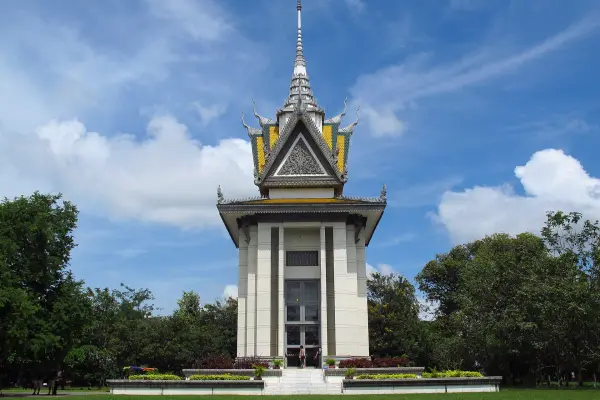
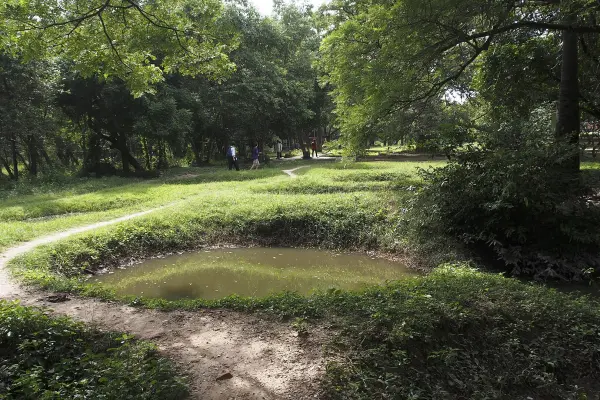
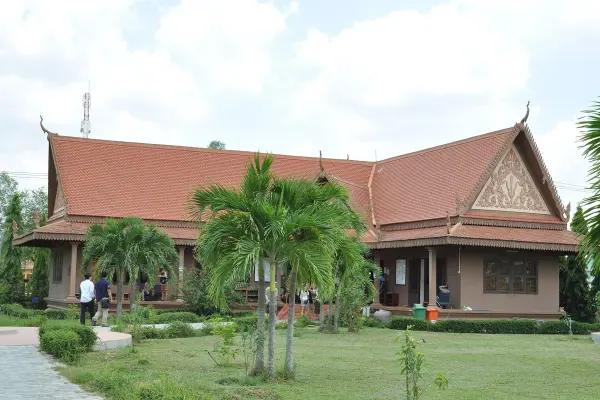 Photos: Timgray200, CC BY-SA 3.0; Clay Gilliland, CC BY-SA 2.0; shankar s. from Dubai, united arab emirates, CC BY 2.0
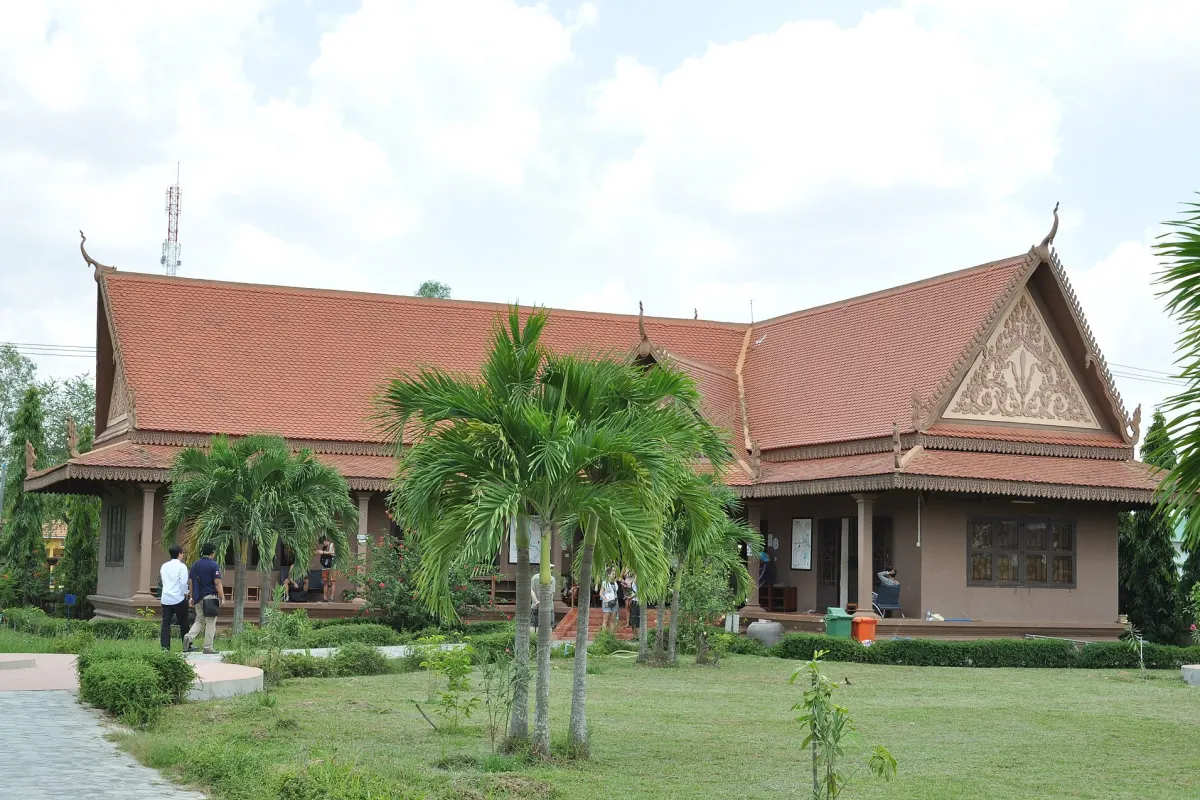
- Beef lok lak: HoubHoub Cambodian Restaurant (BKK1)BKK1 (Langka Lane)Also good: Khmer Women' Food · Tonle Bassac (near St 308), Kengkong Restaurant · Boeung Keng Kang (near Tuol Sleng)
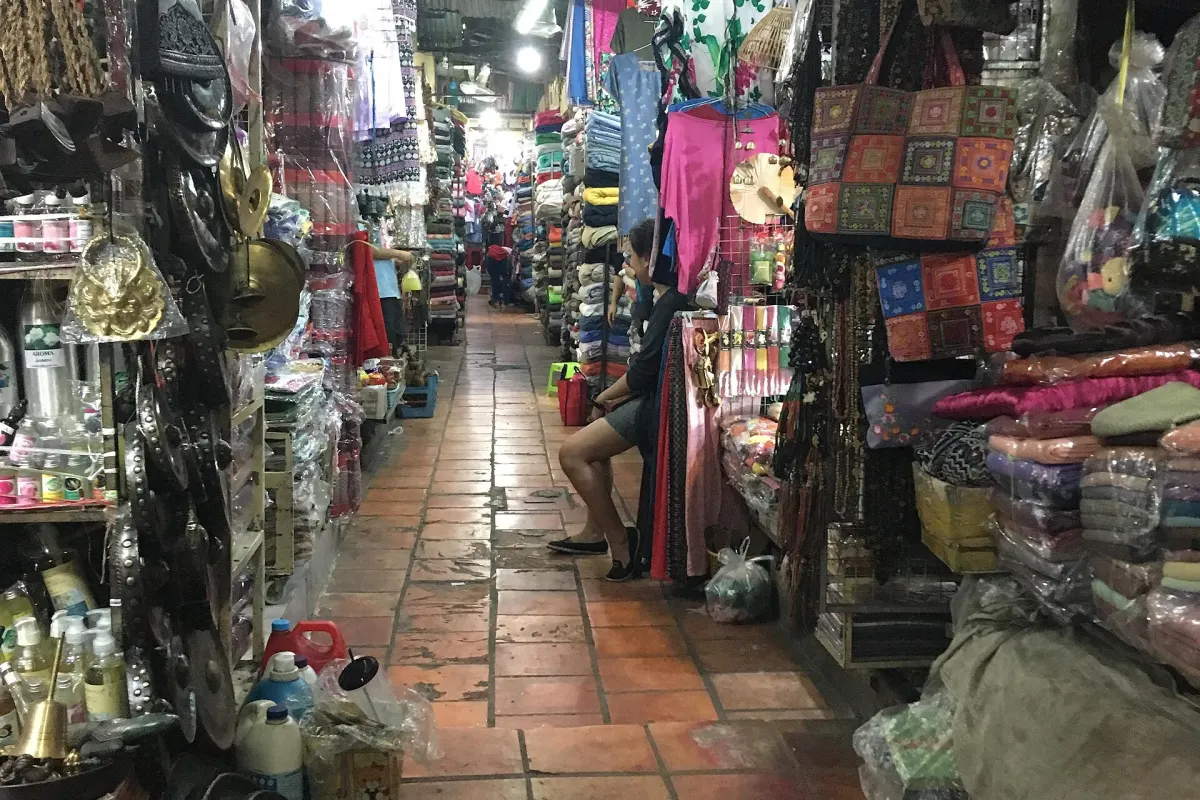
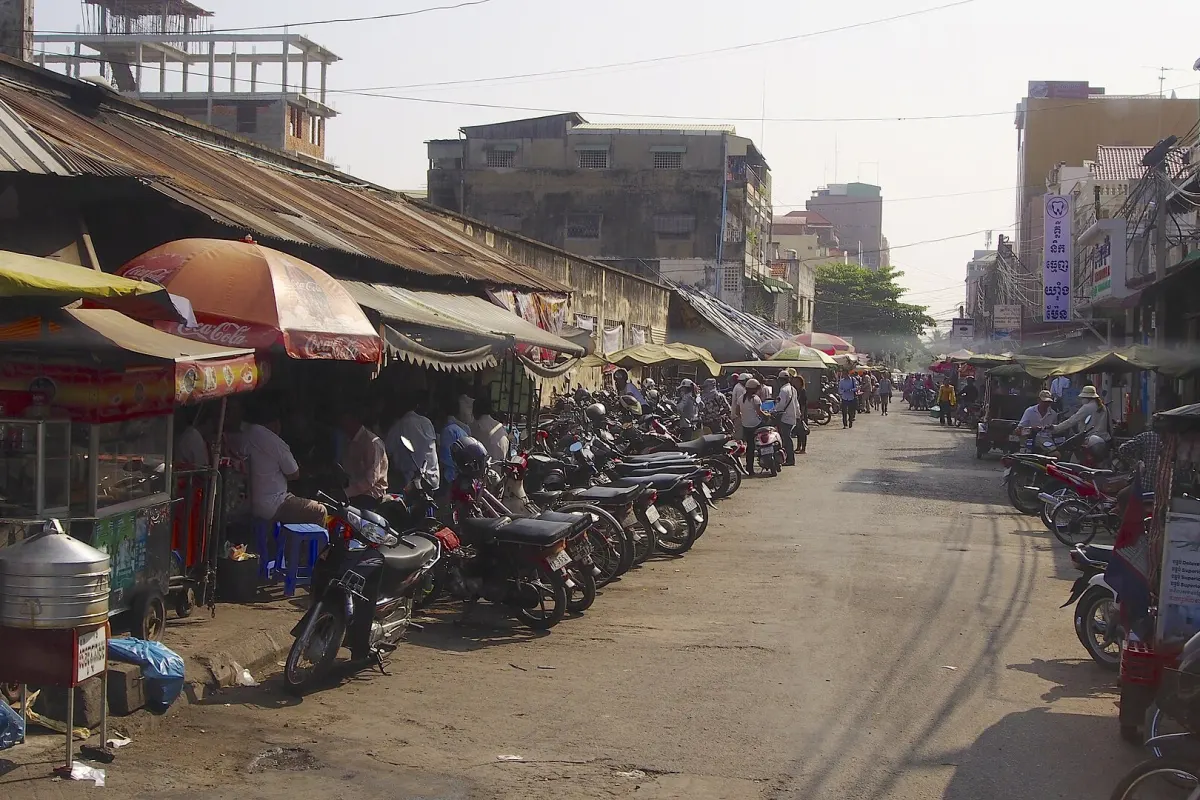
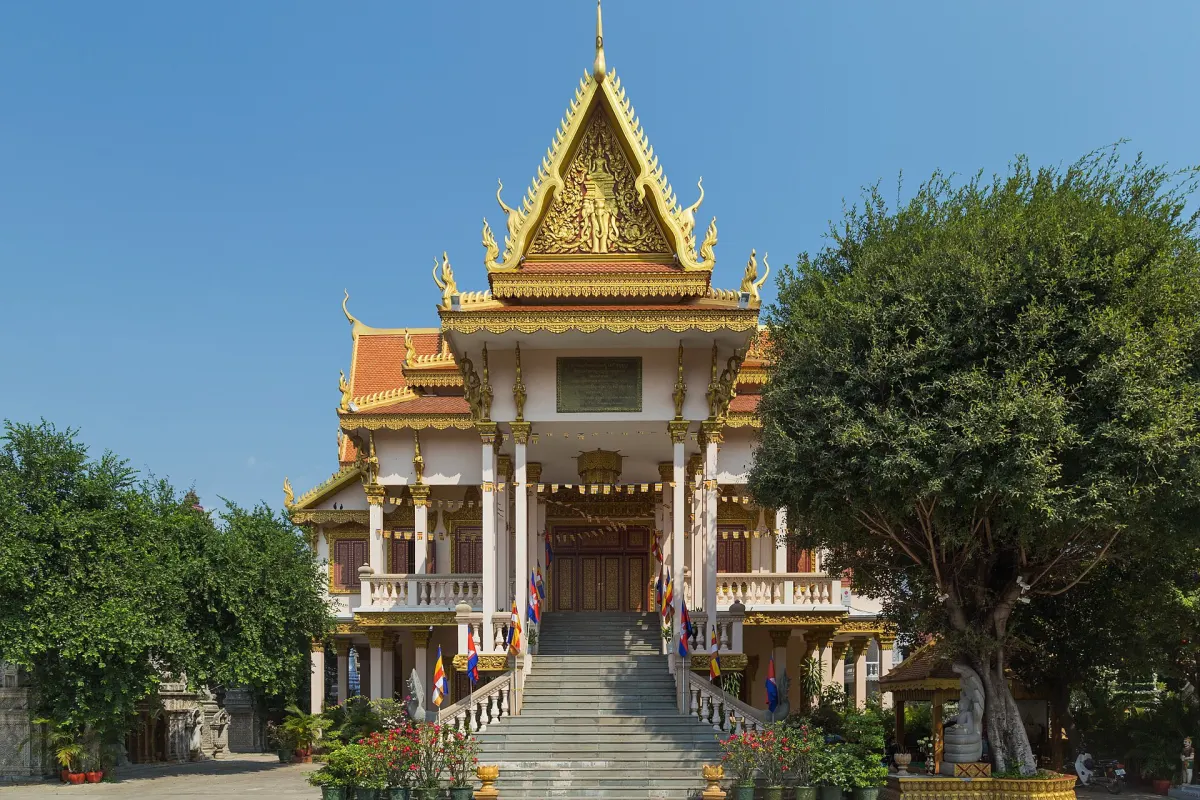
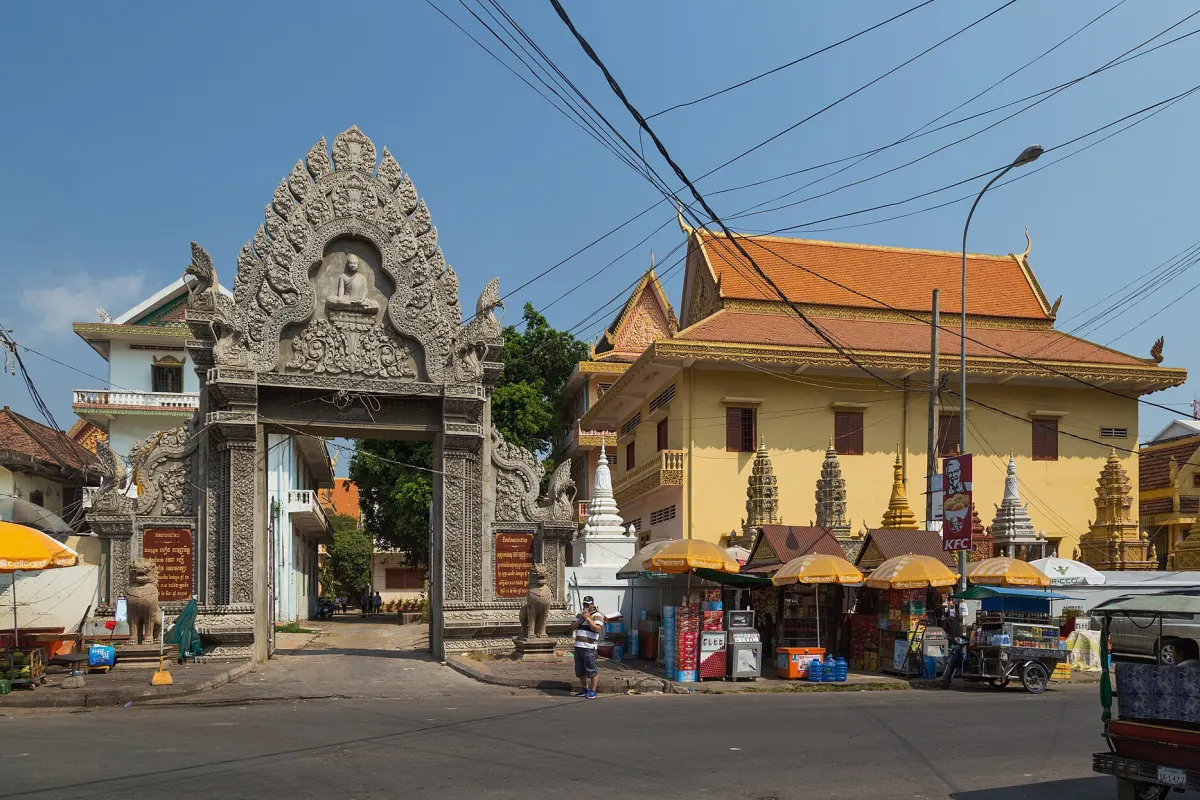
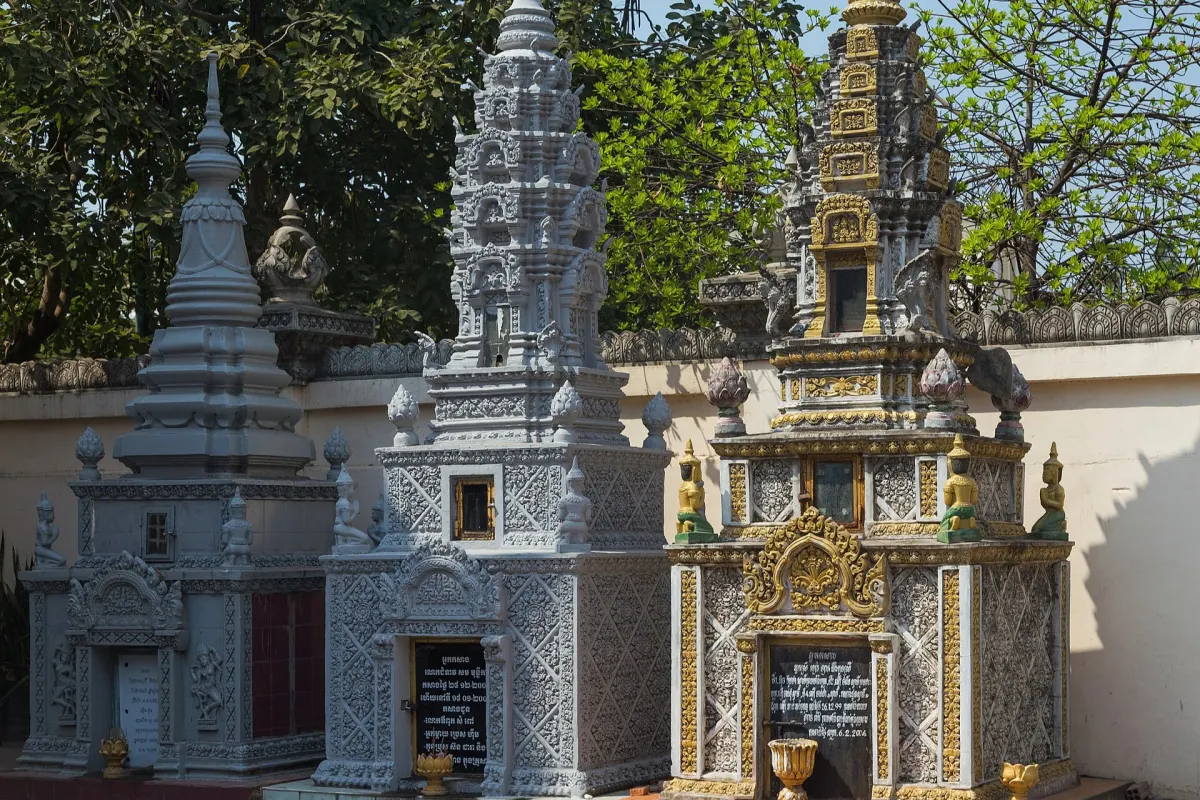
- Fish amok: Phnom Penh Three Rivers RestaurantRiverside (by the National Museum)Also good: Khmer Surin Restaurant · BKK1, LaBaab Restaurant · Daun Penh (Monivong, near Vattanac Tower)
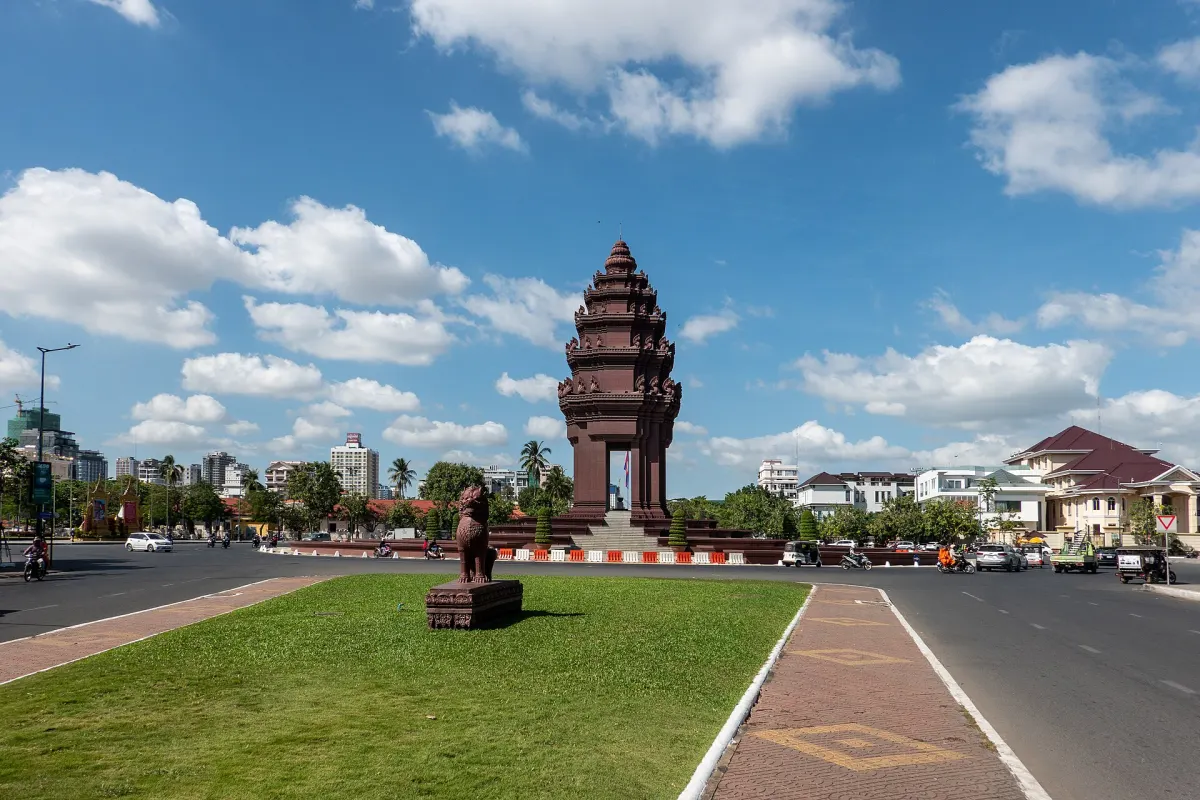
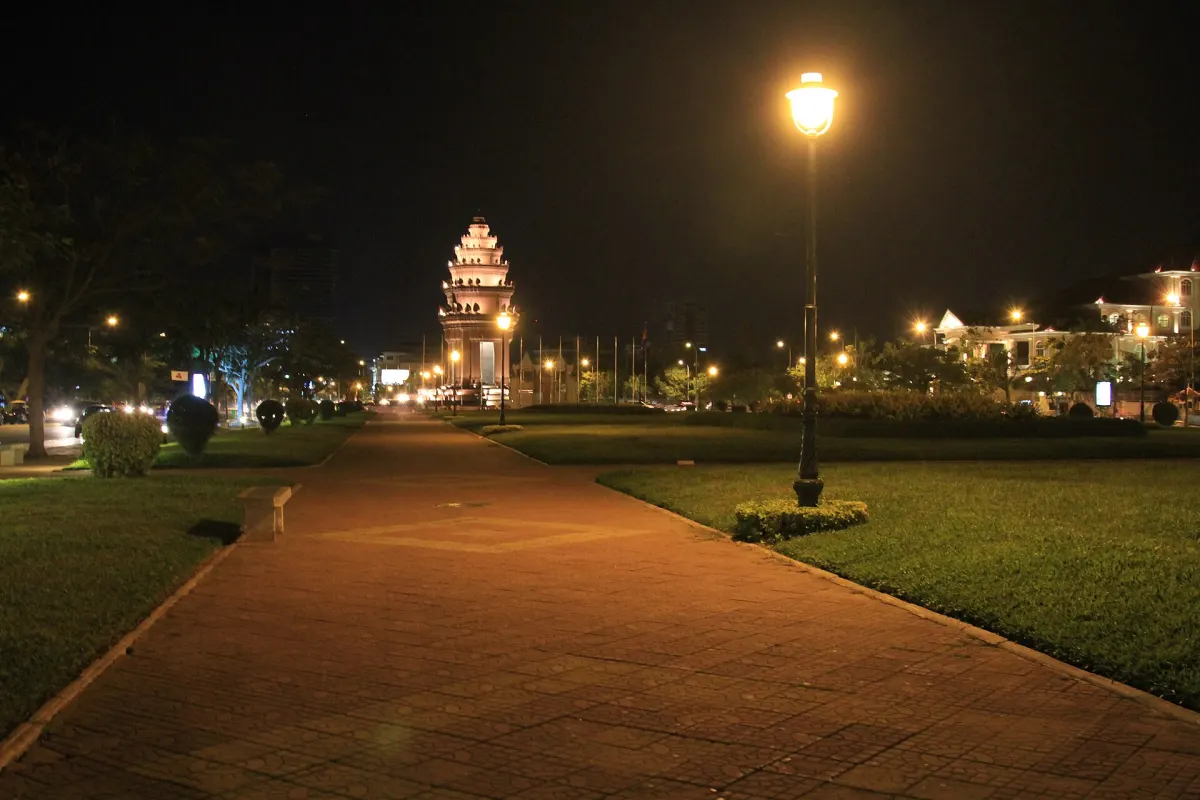
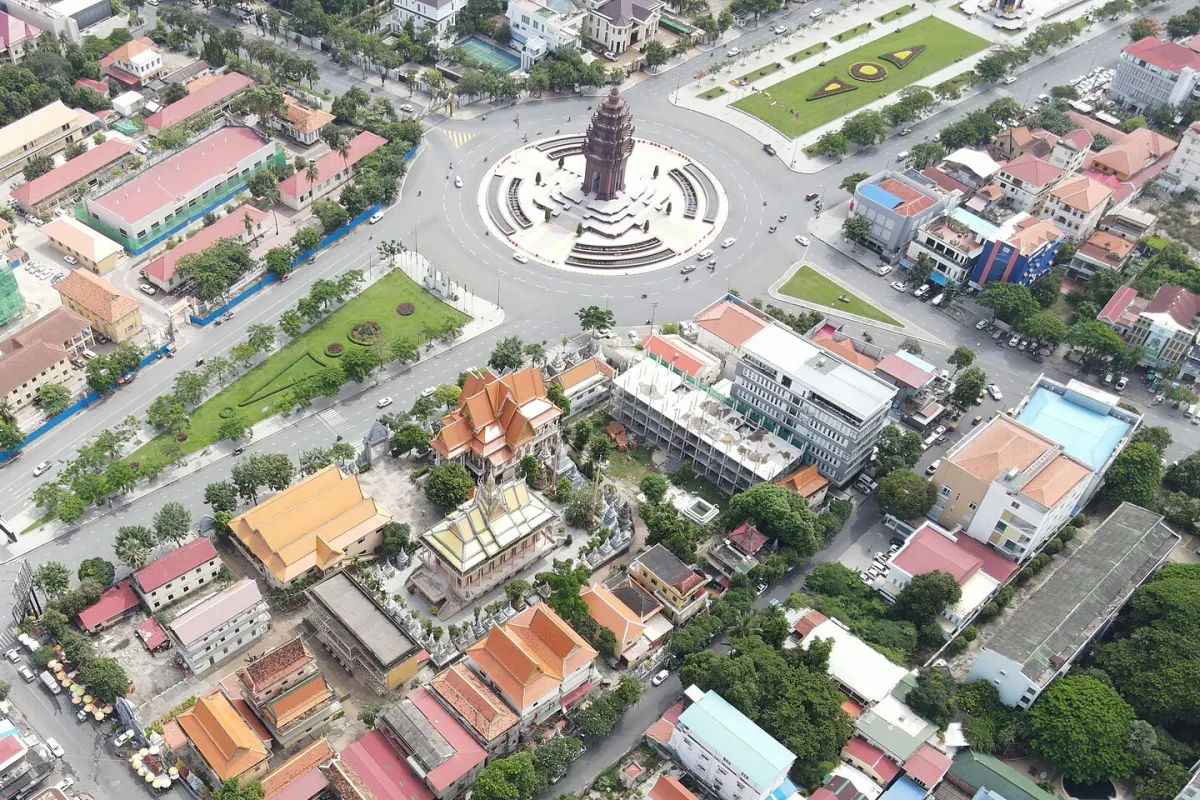
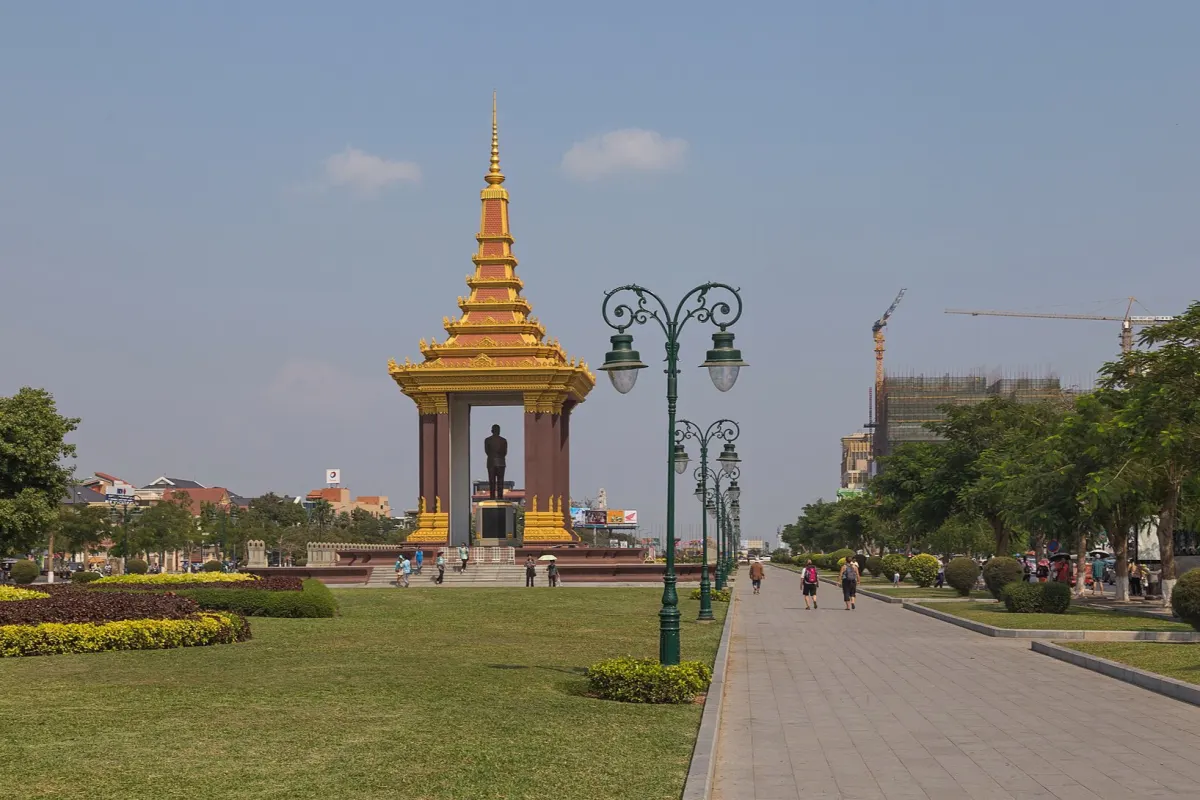
If it rains Tuol Sleng and the Russian Market are covered; Choeung Ek is open-air, so go in the morning and shelter in the market if the afternoon storms.
Add if you have time Bassac Lane's small bars after dinner.
Route last checked 2026-10-23 — verify hours and bookings before you go.
Ticket links in this guide are Klook affiliate links. If you book through them, PlanAsiaTrips may earn a commission, at no extra cost to you.
Want this as an interactive guide you can reshape by length, budget and pace — with the maps, food and a one-tap PDF?
Get the Phnom Penh Destination Pass · S$9.90 Or build a free planWhere to stay in Phnom Penh
Phnom Penh is great value, with stylish boutique hotels and rooftop pools at mid-range prices. Most visitors base on the Riverside (Sisowath Quay) for the palace, restaurants and river, or in leafy BKK1 for the best café-and-restaurant scene. The city is compact enough that anywhere central works with a quick Grab. Pick a place with a pool — it's a hot, humid city.
Riverside (Sisowath Quay)
First-timers — the river, the Royal Palace and restaurants on foot
BKK1
Boutique hotels and the best café-and-restaurant district
Daun Penh (central)
Walkable to Wat Phnom, the markets and the colonial quarter
Tonlé Bassac
Riverside high-rises near Aeon Mall and the Bassac Lane bars
By budget
- Budget — S$16–47 · Guesthouses & hostels, Pool guesthouses (great value)
- Mid-range — S$60–150 · Boutique pool hotels, 4-star hotels
- Comfortable — S$200–620+ · 5-star hotels & heritage colonial hotels, Riverfront high-rises
- A boutique hotel with a rooftop pool is superb value here — a vital midday cool-down in the heat.
- Riverside puts you on foot to the palace and the evening promenade; BKK1 is the foodie-and-café base.
- Watch for bag-snatching from motorbikes riverside at night — choose well-lit streets and keep bags inside.
Rates and availability change, and peak season (Nov–Feb) is dearer — confirm with the property or a booking site before paying.
What to budget for Phnom Penh
Per person, per day, excluding flights. A rough guide only — your costs depend on season, area and pace.
Budget
- Accommodation: Pool guesthouse or hostel on the Riverside or in BKK1 (US$12–35).
- Meals: Markets and local kitchens — kuy teav, lok lak, num pang, street food (US$1–4/meal).
- Transport: Grab/PassApp tuk-tuks; walk the central sights.
- Attractions: The cheap big sights — Royal Palace, National Museum, Tuol Sleng and Choeung Ek with the audio guide, Wat Phnom.
- Evening: A riverside walk, street-food carts, the lit Independence Monument.
Mid-range
- Accommodation: Boutique pool hotel on the Riverside or in BKK1 (US$45–110).
- Meals: Sit-down Khmer — fish amok, Cambodian BBQ, grilled river fish — plus the BKK1 café scene (US$5–15/meal).
- Transport: Grab everywhere; a tuk-tuk for the day to Choeung Ek.
- Attractions: Add a Mekong sunset cruise, a guided history half-day and a silk-island trip.
- Evening: A Mekong sunset cruise, a Bassac Lane bar, a riverside Khmer dinner.
Comfortable
- Accommodation: 5-star or heritage colonial hotel with a rooftop pool (US$150–450+).
- Meals: A modern-Khmer tasting menu and fine dining with great wine (US$30–90+/head).
- Transport: A private car with guide for the whole stay.
- Attractions: Add a private guided history day, a sunset dinner cruise, a spa and an Oudong day trip.
- Evening: A degustation dinner, a rooftop cocktail over the river, a private sunset cruise.
When to visit Phnom Penh
Phnom Penh is tropical and hot year-round. The cool-dry season (Nov–Feb) is the most comfortable and the peak; March–May is intensely hot; the wet season (Jun–Oct) brings heavy afternoon downpours and the dramatic 'reversing' of the Tonlé Sap. Check a forecast close to your dates and plan indoor sights for the hottest hours.
Cool & dry (peak — the best weather) Nov, Dec, Jan, Feb
The most pleasant time, ~22–32°C, dry and clearer, with cooler evenings for the riverside.
An easy time to walk the riverfront and combine the palace, museums and memorials; book hotels early over the year-end.
Look out for: Peak tourist season, Year-end hotel prices rise
Hot & dry (the furnace) Mar, Apr, May
Very hot, ~28–38°C+, with April the hottest, before the first pre-monsoon storms in May.
Front-load the palace, Wat Phnom and the riverside in the cool morning; save the National Museum, markets and cafés for the heat of the day.
Look out for: Khmer New Year (Chaul Chnam Thmey, mid-Apr)
Wet & green (lush, dramatic, fewer crowds) Jun, Jul, Aug, Sep, Oct
Hot and humid, ~25–34°C, with short heavy afternoon downpours; the rivers swell and the countryside greens.
Do outdoor sights and the river cruise in the morning before the rain; keep the National Museum, Tuol Sleng, markets and cafés as afternoon-storm backups.
Look out for: Lush green surroundings, Lower prices, Pchum Ben ancestors' festival (Sep/Oct) — a major, atmospheric holiday
Common Phnom Penh mistakes to avoid
- Doing both genocide memorials and the Royal Palace in one rushed morning — the memorials deserve a slower, separate half-day.
- Skipping the National Museum — its Khmer sculpture is the perfect context before or after Siem Reap's temples.
- Underestimating the heat and traffic — build in café and pool breaks and use Grab rather than walking long distances midday.
- Carrying torn or old US dollars — many vendors refuse them; bring clean small bills.
- Treating Choeung Ek as a casual sightseeing stop — it's a former killing field; go with respect and the audio guide.
Good to know in Phnom Penh
Getting around
- Grab/PassApp tuk-tuks and cars are the simplest way around — cheap, with upfront fares.
- The riverside, Royal Palace, National Museum and Wat Phnom are an easy walk from each other.
- Hire a tuk-tuk or car for the half-day round trip to Choeung Ek, Oudong or Koh Dach silk island.
- A classic cyclo (pedicab) is a slow, scenic way to see the colonial quarter — agree the fare first.
- Long-distance: express buses to Siem Reap (~6 hrs) and the coast, plus a scenic slow train south to Kampot/Sihanoukville.
There's no metro. The easy way around is a tuk-tuk or car booked on the Grab/PassApp apps — cheap, with upfront fares. Central sights (the Palace, museum, riverside, Wat Phnom) are walkable. Hire a t…
Money & connectivity
- US dollars are the everyday currency — bring clean, untorn small bills; riel comes as change under a dollar. Cards work in hotels, malls and bigger restaurants; markets, tuk-tuks and street food are cash. ATMs dispense USD (watch the withdrawal fees).
- Cheap, easy local SIMs/eSIMs (Smart, Cellcard, Metfone) with good 4G across the city; free Wi-Fi in most hotels and cafés.
- Appreciated in tourism — a dollar or two for a tuk-tuk driver or guide, and small tips at restaurants (some add a service charge). Never demanded.
Local etiquette
- Dress modestly for the Royal Palace and temples — cover shoulders and knees, or you may be turned away or asked to cover up.
- The Tuol Sleng (S-21) and Choeung Ek memorials are places of mourning — be quiet and respectful, dress appropriately, and ask before photographing people; the audio guide is worth it.
- Remove shoes and hats at active shrines; don't touch monks or hand things directly to them (especially women).
- Traffic is chaotic — cross slowly and predictably; agree tuk-tuk fares before you ride and ignore over-friendly touts.
Police: 117 · Ambulance: 119 · Tourist Police: +855 12 942 484 · Do NOT drink tap water — stick to bottled/filtered. Watch your bag against snatch-theft from passing motorbikes, especially riverside at night.
Phnom Penh — frequently asked questions
How many days do you need in Phnom Penh?
2 days is the usual recommendation for Phnom Penh. The plan here runs to 2 days, and the full guide builds routes from 1–3 days — so you can shorten or extend it to fit your trip.
What food is Phnom Penh known for?
Phnom Penh's highlights include Fish amok, Beef lok lak, Kuy teav (noodle soup), Num pang (Cambodian baguette), Bai sach chrouk (pork & rice) and more. Each is linked to Google Maps in the route above; famous spots queue at peak times, so go off-peak or pick a neighbouring stall.
Where should I stay in Phnom Penh?
Good bases include Riverside (Sisowath Quay) (First-timers — the river, the Royal Palace and restaurants…); BKK1 (Boutique hotels and the best café-and-restaurant district); Daun Penh (central) (Walkable to Wat Phnom, the markets and the colonial quarter). See "Where to stay" above for the full breakdown by budget.
How much does Phnom Penh cost per day?
Roughly around S$30–55 a day on a budget, S$60–120 mid-range, S$140–350+ comfortable per person, excluding flights and accommodation swings. See "Budget" above for what each tier covers.
When is the best time to visit Phnom Penh?
Phnom Penh is tropical and hot year-round. The cool-dry season (Nov–Feb) is the most comfortable and the peak; March–May is intensely hot; the wet season (Jun–Oct) brings heavy afternoon downpours and the dramatic 'reversing' of the Tonlé Sap. Check a forecast close to your dates and plan indoor sights for the hottest hours. See "When to go" above for the month-by-month detail.
Do I need a visa for Cambodia?
Most visitors need a Cambodian tourist visa — available as an e-Visa online before travel or visa-on-arrival at the airport (a passport photo and the fee in clean US dollars). Requirements and fees change; confirm your own eligibility on the official Cambodian e-Visa and immigration websites before booking.
Plan Phnom Penh your way
Start free, or get the complete interactive guide — maps, food, day-by-day routes you can reshape, and a one-tap PDF.
What the Phnom Penh Destination Pass adds
- A day-by-day plan for your own dates and trip length, every stop timed with the travel time between them
- Closed days and public holidays on your dates flagged before you go
- Weather, sunrise and sunset for each day of your trip
- Named places for every local dish, with 2–3 options and their hours
- One-tap directions to every stop
- Optional nights out: bars, rooftops and clubs that are open on your dates
- Works offline once opened, plus a PDF and a calendar file