
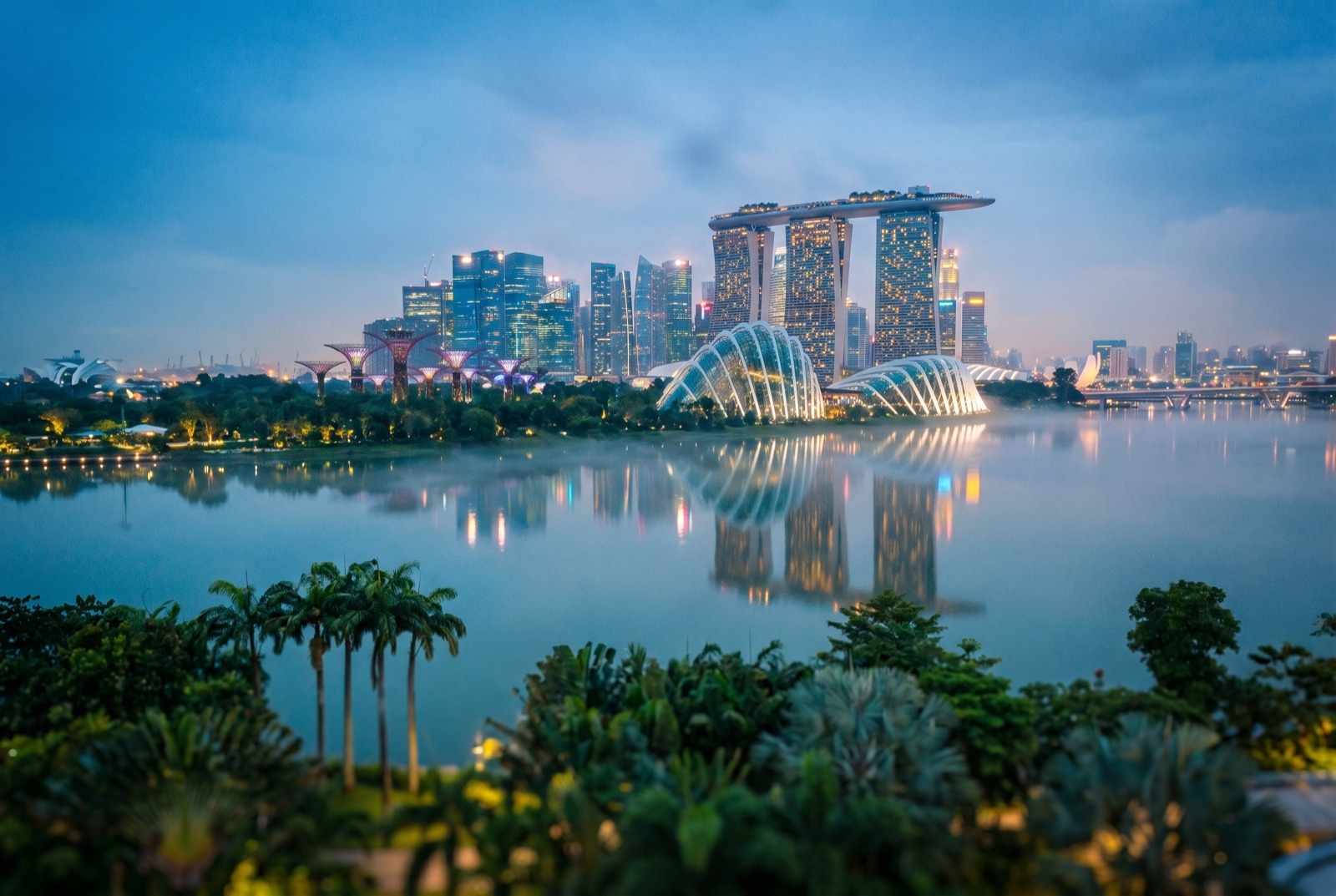
Singapore for First-Time Visitors: A Practical 3-Day Plan
The icons, the hawker food and the four cultural quarters in three well-paced days — with where to stay, what to budget, and the first-timer mistakes worth skipping.
Singapore rewards a first visit that does more than tick off Marina Bay. Three days is enough to see the skyline and the light shows, eat properly at a hawker centre, and walk the heritage quarters that most rushed itineraries skip — and because the island is small and the MRT is excellent, you can do it without long transfers.
The route below is the one we'd give a friend landing for the first time: bay icons first, then Chinatown and the river, then Little India, Kampong Glam and Orchard. Every stop links straight to Google Maps so you can see where it sits, and the whole thing is built to stay comfortable in the heat.
At a glance
Your day-by-day Singapore route
A 3-day first-timer route
Icons and light shows, then heritage and hawker food, then the cultural quarters — central throughout, with short MRT hops between areas.
Bay icons, Chinatown heritage, then the cultural quarters — Little India and Kampong Glam — finishing on Orchard Road.
Day 1Marina Bay icons & the light shows
- Merlion Park & Marina Bay waterfrontMarina Bay
- National Gallery SingaporeCivic District
- Hainanese chicken rice Bib GourmandCitywide
- Marina Bay Sands & SkyParkMarina Bay
- Satay (Lau Pa Sat satay street)CBD / Citywide
- Gardens by the BayMarina Bay
If it rains The National Gallery, the Sands mall and the Gardens domes are indoor.
Add if you have time The ArtScience Museum's teamLab Future World.
Day 2Chinatown heritage, hawker food & the river
- ChinatownChinatown
- Buddha Tooth Relic TempleChinatown
- Soya-sauce chicken rice (Hawker Chan) MICHELINChinatown
- National Museum of SingaporeCivic District
- Char kway teowCitywide
- Clarke Quay & the Singapore RiverClarke Quay
If it rains The temple, museum and food centre keep you sheltered.
Add if you have time A bumboat river cruise.
Day 3Little India, Kampong Glam & Orchard
- Little India & Tekka MarketLittle India
- Banana-leaf & South Indian (Little India)Little India
- Kampong Glam, Sultan Mosque & Haji LaneKampong Glam
- Singapore fried Hokkien mee Bib GourmandCitywide
- Orchard RoadOrchard
If it rains Tekka Market, the Sultan Mosque and the Orchard malls all shelter you.
Add if you have time Haji Lane's indie shops and bars.
Route last checked 2026-06-15 — verify hours and bookings before you go.
Want this as an interactive guide you can reshape by length, budget and pace — with the maps, food and a one-tap PDF?
Get the Singapore Destination Pass · S$16.90 Or build a free planWhere to stay in Singapore
Singapore is small and the MRT is excellent, so almost any central area works. Marina Bay/City Hall puts the icons and museums on your doorstep; Chinatown/Tanjong Pagar and Bugis/Kampong Glam give heritage character and value; Orchard is shopping-central; Sentosa suits a family resort base. Accommodation is the biggest cost here — book ahead.
Marina Bay / City Hall
The icons, light shows and museums; first-timers
Chinatown / Tanjong Pagar
Heritage shophouses, hawker food and value; great MRT links
Bugis / Kampong Glam
Hip, central and walkable to Arab Street and Little India
Orchard Road
Shopping and malls
Sentosa
A resort base for families (Universal Studios, beaches)
By budget
- Budget — S$35–110 · Hostels & capsule pods, Budget boutique hotels
- Mid-range — S$150–320 · 3–4 star hotels, Boutique shophouse hotels
- Comfortable — S$380–1,000+ · 5-star hotels, Marina Bay Sands, Sentosa resorts
- Accommodation is pricey here — booking early and staying near an MRT station saves the most.
- A central heritage-area hotel (Chinatown, Kampong Glam) gives character and great food on foot.
- Marina Bay Sands is the splurge-icon stay; Sentosa suits families doing the theme parks.
Rates and availability change constantly — confirm with the hotel or a booking site before paying.
What to budget for Singapore
Per person, per day, excluding flights. A rough guide only — your costs depend on season, area and pace.
Budget
- Accommodation: Hostel, capsule or budget hotel near an MRT (S$35–110).
- Meals: Hawker centres all the way — chicken rice, laksa, char kway teow, Bib Gourmand stalls (S$4–10/meal).
- Transport: MRT + buses (tap your bank card); walk the heritage quarters.
- Attractions: Free icons — Gardens by the Bay outdoor, Merlion, the light shows, Botanic Gardens, the Southern Ridges, Jewel.
- Evening: The free Spectra and Garden Rhapsody light shows, a Marina Bay walk, a hawker dinner.
Mid-range
- Accommodation: 3–4 star or boutique shophouse hotel near an MRT (S$150–320).
- Meals: Hawker classics plus a Peranakan or seafood sit-down (S$10–40/meal).
- Transport: MRT plus Grab for comfort and the zoo.
- Attractions: Add Gardens by the Bay domes, the ArtScience Museum, the Singapore Zoo or Sentosa.
- Evening: A river bumboat cruise, a chilli-crab dinner, or a rooftop drink.
Comfortable
- Accommodation: 5-star hotel, Marina Bay Sands or a Sentosa resort (S$380–1,000+).
- Meals: A Michelin-starred tasting menu or a premium seafood night, plus great cafés (S$60–400+/head).
- Transport: Grab everywhere; private transfers.
- Attractions: Add Universal Studios with Express, a SkyPark sunset, a spa, the Night Safari.
- Evening: A starred dinner, then a skyline rooftop bar.
When to visit Singapore
Singapore sits on the equator — it's hot and humid all year (roughly 26–33°C) with rain possible any day. There are no real 'seasons', only monsoon variation. Check a forecast close to your dates.
Wetter (NE monsoon) Nov, Dec, Jan
Warm and humid, 24–31°C, with the year's heaviest rain — frequent afternoon downpours and the occasional all-day wet spell.
Keep indoor backups ready (museums, malls, Jewel, the domes); plan outdoor sights for the morning before the rain builds.
Look out for: Christmas lights on Orchard Road, Festive Gardens by the Bay
Hot & relatively drier Feb, Mar, Apr, May, Jun, Jul
Hot and humid, 26–33°C, with shorter, sharper afternoon storms.
Front-load outdoor sights; retreat to museums, Jewel, the Gardens domes or malls in the midday heat.
Look out for: Chinese New Year (Jan/Feb), Hari Raya bazaars, Great Singapore Sale (mid-year)
Possible haze window Aug, Sep, Oct
Hot and humid, 26–33°C; in some years regional haze reduces air quality for spells.
If haze is bad, favour indoor sights (museums, Jewel, malls, the Gardens domes) and check the NEA haze/PSI readings.
Look out for: National Day (9 Aug), F1 Singapore Grand Prix (Sep)
Common Singapore mistakes to avoid
- Seeing only Marina Bay — the heritage enclaves and hawker centres are the real Singapore.
- Underestimating the heat and humidity — pace yourself and use the air-conditioned MRT and malls.
- Eating only in malls — the best, cheapest food is at hawker centres.
- Bringing chewing gum in quantity, or vaping (both are restricted/illegal).
- Not booking Universal Studios / popular attractions ahead at peak times.
Good to know in Singapore
Getting around
- The MRT is the backbone — fast, cheap, air-conditioned and reaches nearly every sight.
- Buses cover the gaps and are scenic; tap the same card.
- Grab and taxis are reasonable and metered for door-to-door or late nights.
- Walking is easy in the cooler hours, but plan air-conditioned breaks in the heat.
- Sentosa is reached by the Sentosa Express monorail, cable car or a free boardwalk; Pulau Ubin by bumboat from Changi Point.
Just tap a contactless Visa/Mastercard or your phone on the MRT and bus gantries — no separate ticket needed. Or buy an EZ-Link card. The MRT plus buses reach almost everywhere cheaply; Grab and mete…
Money & connectivity
- Cards, Apple/Google Pay and PayNow QR are accepted almost everywhere, including most hawker stalls. Carry a little cash for the oldest stalls and wet markets.
- Excellent, ubiquitous 4G/5G; cheap tourist SIMs/eSIMs at the airport. Free Wi-Fi across malls, MRT and many public spaces.
- Not expected — restaurants add a 10% service charge plus 9% GST. No tipping at hawker centres or taxis.
Local etiquette
- Multicultural and orderly — queue, keep left on escalators, and keep public transport quiet (no eating or drinking on the MRT — it's fined).
- Dress modestly at temples and mosques (cover shoulders/knees; remove shoes where indicated).
- Singapore enforces fines strictly: no littering, no jaywalking, no smoking outside designated areas, no durians on the MRT.
- Hawker etiquette: 'chope' (reserve) a seat with a tissue packet; clear your tray after eating.
Police: 999 · Ambulance & Fire: 995 · Non-emergency ambulance: 1777 · Singapore is very safe; tap water is drinkable straight from the tap.
Singapore — frequently asked questions
Is 3 days enough for Singapore?
3–5 days is the usual recommendation for Singapore. The plan here runs to 3 days, and the full guide builds routes from 1–7 days — so you can shorten or extend it to fit your trip.
What food should I try in Singapore?
Singapore's highlights include Hainanese chicken rice, Bak chor mee (minced-pork noodles), Sliced fish soup, Chilli crab & black-pepper crab, Katong laksa and more. Each is linked to Google Maps in the route above; famous spots queue at peak times, so go off-peak or pick a neighbouring stall.
Where should a first-timer stay in Singapore?
Good bases include Marina Bay / City Hall (The icons, light shows and museums; first-timers); Chinatown / Tanjong Pagar (Heritage shophouses, hawker food and value; great MRT links); Bugis / Kampong Glam (Hip, central and walkable to Arab Street and Little India). See "Where to stay" above for the full breakdown by budget.
How much does Singapore cost per day?
Roughly around S$60–100 a day on a budget, S$120–220 mid-range, S$280–600+ comfortable per person, excluding flights and accommodation swings. See "Budget" above for what each tier covers.
When is the best time to visit Singapore?
Singapore sits on the equator — it's hot and humid all year (roughly 26–33°C) with rain possible any day. There are no real 'seasons', only monsoon variation. Check a forecast close to your dates. See "When to go" above for the month-by-month detail.
Do I need a visa or an arrival card for Singapore?
Most visitors enter Singapore visa-free for short stays, but rules vary by passport and nearly all arrivals must submit the SG Arrival Card (SGAC) online within 3 days before arrival. Confirm your own requirements on the official ICA / SG Arrival Card website before travelling.
Plan Singapore your way
Start free, or get the complete interactive guide — maps, food, day-by-day routes you can reshape, and a one-tap PDF.