
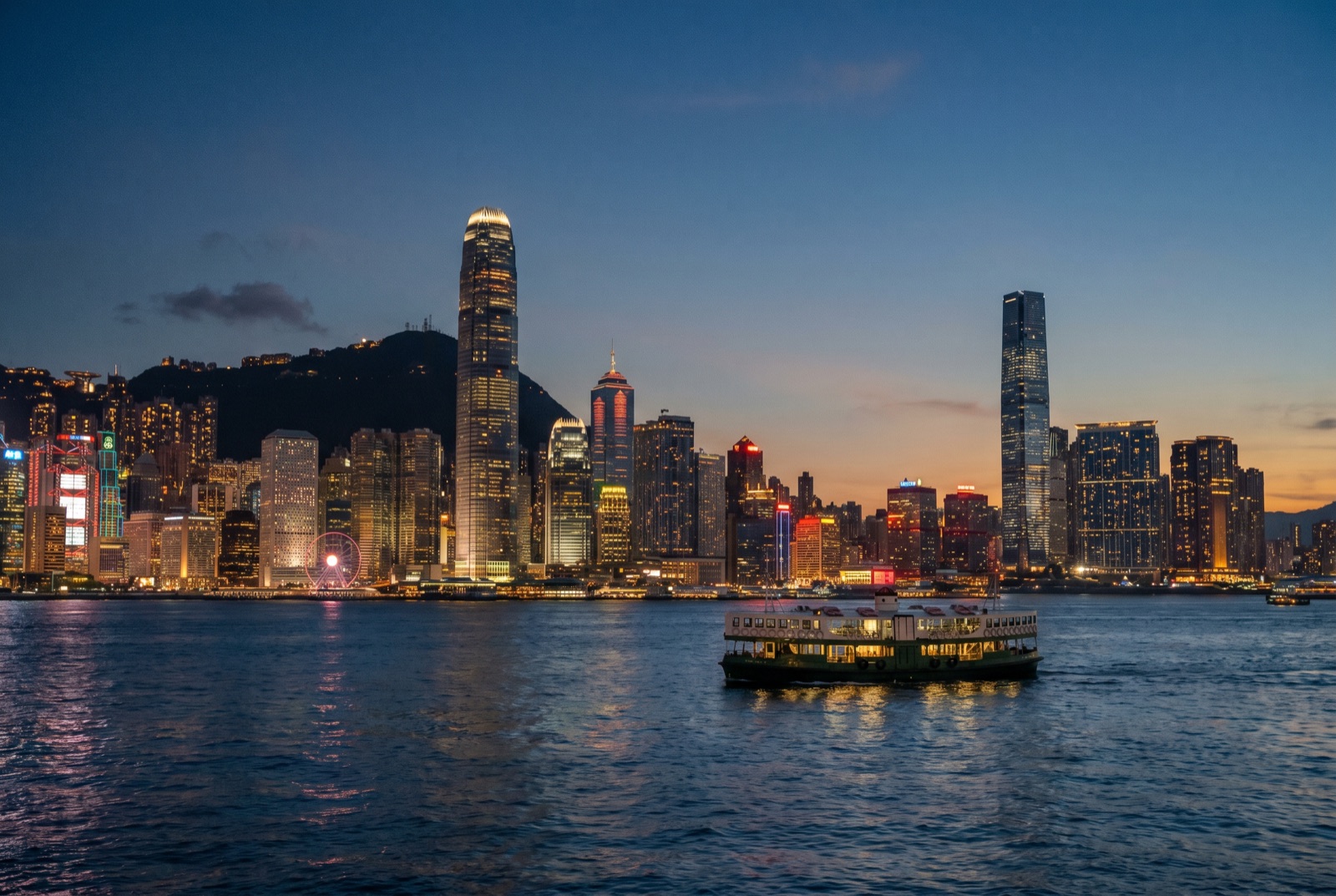
Hong Kong in 4 Days: A Complete Itinerary
The Peak and the harbour, dim sum and street markets, the islands and the neon — a complete four-day Hong Kong itinerary with real stops, Maps links, where to stay and what to budget.
Hong Kong packs an enormous amount into a small, vertical, superbly-connected city — which is exactly why four days works so well. You can do the skyline and the harbour, eat dim sum properly, ride the Star Ferry and the trams, and still have a day for an island or the green side most visitors never reach.
This four-day plan uses the MTR and the ferries to move quickly, groups the city by district, and times the views for when they're best. Each stop links straight to Google Maps.
At a glance
Your day-by-day Hong Kong route
A 4-day Hong Kong route
Harbour and the Peak, Kowloon's markets and food, an island or country-park day, and the neighbourhoods — moved between by MTR, tram and ferry.
The classic three days plus a south-side day — a ridge hike with sea views, the seaside village of Stanley and the beaches — for a fuller, more active Hong Kong.
Day 1Kowloon — harbourfront, museums & night markets
- Star Ferry (Victoria Harbour crossing)Victoria Harbour
- Tsim Sha Tsui Promenade & Avenue of StarsTsim Sha Tsui
- Dim sum (yum cha) Bib GourmandCitywide
- M+ Museum (West Kowloon)West Kowloon
- Hong Kong Palace MuseumWest Kowloon
- Claypot rice (bou jai faan)Yau Ma Tei / Citywide
- Temple Street Night MarketYau Ma Tei
If it rains M+ and the Palace Museum are fully indoors — ideal for a wet day.
Add if you have time The 20:00 Symphony of Lights from the promenade.
Day 2HK Island — old streets, a park & the Peak at sunset
- Wonton noodles (wun tun mein)Central / Citywide
- Hong Kong Park & AviaryAdmiralty
- Hotpot (da bin lo)Causeway Bay / Citywide
- Victoria Peak (The Peak)The Peak
If it rains Tai Kwun and the galleries cover a wet morning; do the Peak on the clearer day.
Add if you have time SoHo bars after dinner.
Day 3Lantau — Big Buddha & cable car, then Kowloon street life
- Beef brisket noodles (ngau lam mein)Central / Sheung Wan
- Sham Shui Po (street life, food & finds)Sham Shui Po
- Dai pai dong wok dishes (wok hei)Central / Sham Shui Po
If it rains Lantau mist can hide the Buddha — swap in Sham Shui Po, the markets and a museum.
Add if you have time Ngong Ping village and the Wisdom Path.
Day 4South side — a ridge hike, Stanley & the beaches
- Stanley Market & waterfrontStanley
- Repulse BayRepulse Bay
- Island & Sai Kung seafoodSai Kung / Lamma / Cheung Chau
If it rains Skip the hike if it's wet — do Stanley, Repulse Bay and the south-side sights, or swap in Ocean Park (its own MTR stop).
Add if you have time A swim at Big Wave Bay at the end of the Dragon's Back trail.
Route last checked 2026-06-17 — verify hours and bookings before you go.
Want this as an interactive guide you can reshape by length, budget and pace — with the maps, food and a one-tap PDF?
Get the Hong Kong Destination Pass · S$16.90 Or build a free planWhere to stay in Hong Kong
Hong Kong is dense and the MTR is superb, so anywhere central works. Tsim Sha Tsui puts the harbourfront, museums and skyline view on your doorstep; Central/Sheung Wan is best for the Peak, galleries and dining; Causeway Bay is shopping-and-food central; Mong Kok/Jordan is the most local and best value. Rooms are small and rates are high — book early.
Tsim Sha Tsui (Kowloon)
First-timers — harbourfront, skyline views, museums and the Star Ferry
Central / Sheung Wan (HK Island)
The Peak, galleries, SoHo dining and nightlife
Causeway Bay (HK Island)
Shopping, food and tram-and-MTR links; buzzy and central
Mong Kok / Jordan (Kowloon)
Markets, street food and the best value; very local
Wan Chai (HK Island)
Central, lively, between Central and Causeway Bay
By budget
- Budget — HK$300–700 · Hostels & guesthouses, Budget hotels (rooms are tiny)
- Mid-range — HK$900–1,800 · 3–4 star hotels, Boutique hotels
- Comfortable — HK$2,200–5,000+ · 5-star harbourfront hotels, Luxury towers with Peak/harbour views
- Rooms are small — pay for a harbour view in Tsim Sha Tsui only if you'll use it; otherwise prioritise being on the MTR.
- A Kowloon-side base (TST) gives the best skyline view and easy ferry/MTR access to the island.
- Mong Kok and Jordan are the best value and put you in the thick of the markets and street food.
Rates and availability change constantly — confirm with the hotel or a booking site before paying.
What to budget for Hong Kong
Per person, per day, excluding flights. A rough guide only — your costs depend on season, area and pace.
Budget
- Accommodation: Guesthouse or budget hotel in Mong Kok/Jordan (HK$300–700; rooms are tiny).
- Meals: Cha chaan tengs, dai pai dongs, dim sum and Bib Gourmand street food (HK$30–80/meal).
- Transport: MTR, the Star Ferry and trams (tap an Octopus or bank card); walk the markets and Central.
- Attractions: Free icons — the Star Ferry, the harbourfront, the Symphony of Lights, the temples, the markets and the Lugard Road Peak walk.
- Evening: The free 20:00 Symphony of Lights, Temple Street night market, a tram ride and a dai pai dong dinner.
Mid-range
- Accommodation: 3–4 star hotel in TST or Causeway Bay (HK$900–1,800).
- Meals: Street classics plus a sit-down roast-goose lunch or a hotpot/seafood dinner (HK$80–300/meal).
- Transport: MTR plus the odd taxi or Uber for the islands and late nights.
- Attractions: Add the Peak Tram, M+ or the Palace Museum, and a Ngong Ping 360 cable car to the Big Buddha.
- Evening: A harbour dinner cruise, a rooftop bar, or hotpot in Causeway Bay.
Comfortable
- Accommodation: 5-star harbourfront hotel with a Peak or harbour view (HK$2,200–5,000+).
- Meals: A starred Cantonese dinner, a tasting menu or top dim sum, plus the street classics by day.
- Transport: Taxis and private transfers; the MTR when it's faster.
- Attractions: Add Ocean Park or Disneyland, a private junk-boat harbour cruise, or a helicopter/Peak experience.
- Evening: A three-star Cantonese dinner with harbour views, or cocktails on a rooftop terrace.
When to visit Hong Kong
Weather, typhoon signals and event dates change. During a Typhoon Signal 8 or higher, transport, ferries and attractions shut down — always check the Hong Kong Observatory before travelling.
Autumn (the best season) Oct, Nov, Dec
Cool, dry and sunny, 18–26°C — Hong Kong at its finest, with clear skies and great visibility.
No weather caveats — this is the season to prioritise the Peak, Dragon's Back and the islands.
Look out for: Clearest skyline views of the year, Great hiking weather, Festive lights from late November
Winter (cool & dry) Jan, Feb
Cool and dry, 12–20°C, occasionally chilly with a cold snap — bright and comfortable for sightseeing.
Around Chinese New Year, expect closures — plan for malls, big attractions and the festive events, and confirm small eateries are open.
Look out for: Chinese New Year flower markets, parade and fireworks, Hotpot and claypot-rice season
Spring (mild & misty) Mar, Apr
Mild and increasingly humid, 18–26°C, often grey, foggy and damp with low cloud on the Peak.
On a foggy day the Peak view may be socked in — swap in M+, the Palace Museum, Tai Kwun and the markets, and try the Peak on a clearer day.
Look out for: Art Basel and the spring art season, Cheung Chau Bun Festival (usually late spring)
Summer (hot, humid & typhoons) May, Jun, Jul, Aug, Sep
Hot and very humid, 27–33°C, with heavy showers, thunderstorms and the typhoon season (roughly June–October).
Keep indoor backups ready (M+, the Palace Museum, Tai Kwun, malls); do the Peak and hikes early morning, and watch the Observatory for typhoon signals that close transport and attractions.
Look out for: Beach season (Repulse Bay, the islands), Summer sales
Common Hong Kong mistakes to avoid
- Only seeing HK Island — Kowloon's markets and the outlying islands are half the magic.
- Underestimating the heat, humidity and hills — pace yourself and use the MTR and the Mid-Levels escalator.
- Skipping the Star Ferry — it's one of the world's great cheap rides.
- Eating only in malls — dai pai dongs, cha chaan tengs and old noodle shops are the real Hong Kong.
- Going up the Peak at midday — sunset and after dark are far better (and book the Peak Tram ahead).
Good to know in Hong Kong
Getting around
- MTR (metro): the fast, air-conditioned backbone — English signage, frequent trains, reaches the islands (Lantau) and the New Territories.
- Star Ferry: a few dollars across the harbour between TST and Central/Wan Chai — a ride and a sight in one.
- Trams ('ding ding'): slow, scenic double-deckers along the north shore of HK Island; tap your Octopus on exit.
- Buses & minibuses: reach the beaches, the south side (Stanley, Repulse Bay) and the hills the MTR misses.
- Ferries: from Central piers to Cheung Chau, Lamma and the outlying islands.
- Taxis: plentiful and metered (red = urban, green = New Territories, blue = Lantau); many drivers prefer cash and a destination written in Chinese helps.
Buy a stored-value Octopus card (or use a contactless bank card/phone on most lines) and tap on the MTR, buses, trams, the Star Ferry and at convenience stores. The MTR reaches almost everywhere fast…
Money & connectivity
- Octopus card pays for transport and most shops and convenience stores; cards are widely accepted, and Alipay/WeChat Pay are common. Carry some cash for dai pai dong street stalls, wet markets and older noodle shops.
- Excellent 4G/5G; cheap tourist SIMs/eSIMs at the airport and convenience stores. Free Wi-Fi across the MTR, malls and many public spaces.
- Not obligatory. Sit-down restaurants usually add a 10% service charge; round up taxi fares and leave small change. No tipping at street stalls or fast food.
Local etiquette
- Cantonese is the local language but English is widely understood; a few words of Cantonese (m̀h'gōi = thanks/excuse me) go a long way.
- Stand on the right of escalators and let people off the MTR first; the city moves fast.
- Dim sum (yum cha) is a shared, tea-fuelled ritual — tap two fingers to thank someone pouring your tea.
- Dress is casual but smart in bars and finer restaurants; bring layers, as interiors are heavily air-conditioned.
Police / Ambulance / Fire: 999 · Hong Kong is very safe with low violent crime; watch for pickpockets in dense markets. · Tap water is treated to drinking standard, though many residents filter or boil it; bottled water is cheap and easy.
Hong Kong — frequently asked questions
Is 4 days enough for Hong Kong?
3–5 days is the usual recommendation for Hong Kong. The plan here runs to 4 days, and the full guide builds routes from 1–5 days — so you can shorten or extend it to fit your trip.
What food is Hong Kong known for?
Hong Kong's highlights include Dim sum (yum cha), Roast goose (siu ngo), Wonton noodles (wun tun mein), Beef brisket noodles (ngau lam mein), Cha chaan teng classics (HK café) and more. Each is linked to Google Maps in the route above; famous spots queue at peak times, so go off-peak or pick a neighbouring stall.
Where should I stay in Hong Kong?
Good bases include Tsim Sha Tsui (Kowloon) (First-timers — harbourfront, skyline views, museums and the…); Central / Sheung Wan (HK Island) (The Peak, galleries, SoHo dining and nightlife); Causeway Bay (HK Island) (Shopping, food and tram-and-MTR links; buzzy and central). See "Where to stay" above for the full breakdown by budget.
How much does Hong Kong cost per day?
Roughly around HK$350–650 a day on a budget, HK$700–1,400 mid-range, HK$1,600–3,500+ comfortable per person, excluding flights and accommodation swings. See "Budget" above for what each tier covers.
When is the best time to visit Hong Kong?
Weather, typhoon signals and event dates change. During a Typhoon Signal 8 or higher, transport, ferries and attractions shut down — always check the Hong Kong Observatory before travelling. See "When to go" above for the month-by-month detail.
Do I need a visa for Hong Kong?
Many nationalities enter Hong Kong visa-free for short stays, but allowances vary by passport and Hong Kong has its own immigration rules separate from mainland China. A separate visa is required to cross into mainland China. Confirm your own requirements on the official Hong Kong Immigration Department website before booking.
Plan Hong Kong your way
Start free, or get the complete interactive guide — maps, food, day-by-day routes you can reshape, and a one-tap PDF.